
 Nguyễn Chính Ngọc Liên
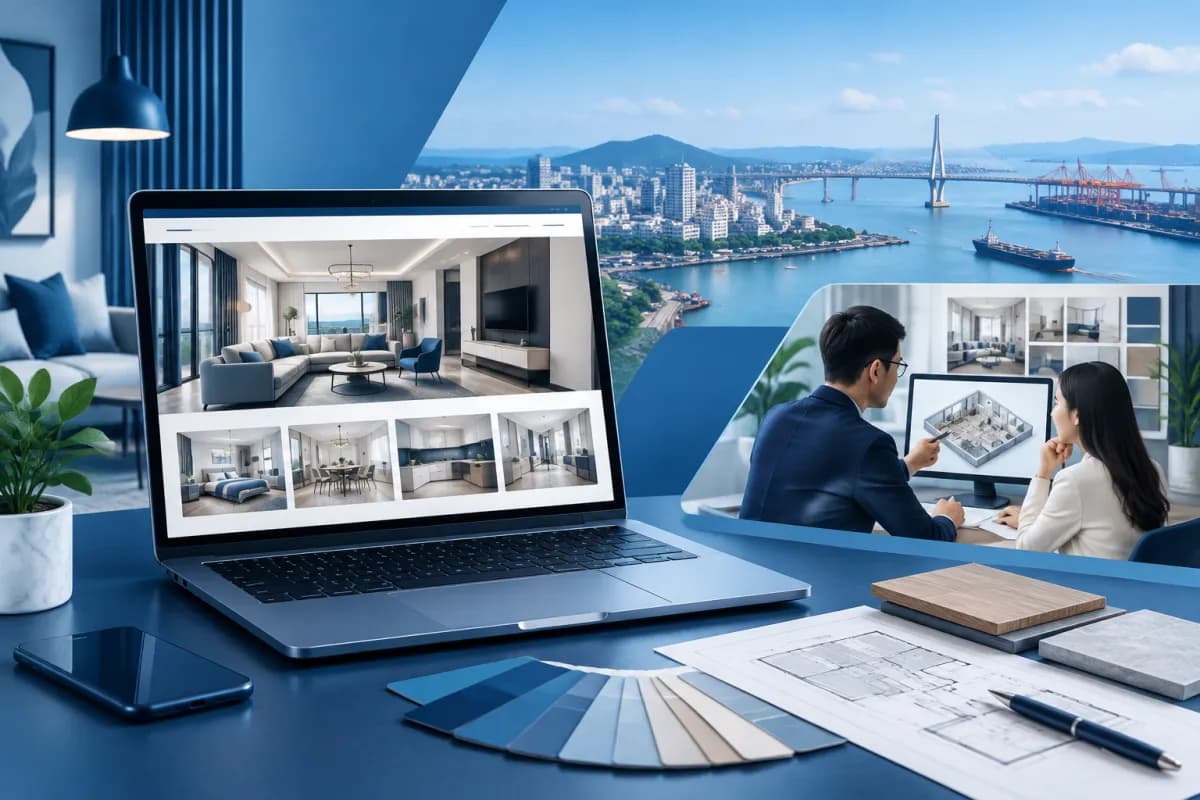
Customers looking for an interior design and fit-out company often want to see completed projects before getting in touch. A well-organized website helps businesses present their style, capabilities, and services persuasively, while providing a clear path from browsing to requesting a consultation. That is why an interior design website in Hai Phong should be planned around customer needs and how the business wants to showcase its projects.
A website is more than a place to post attractive photos. It also helps customers understand what types of projects the business designs, how it works, and what they need to prepare for a consultation. This article explains how to build a suitable content structure, project gallery, and contact experience for an interior design business.
Why do interior design businesses need a project showcase website?
For a highly visual service, photos of completed work and project details are often more persuasive than general claims. A website lets businesses organize projects by type, style, or service scope, helping customers quickly find examples that match their needs.

Unlike an individual social media post, a website can store project portfolios in a consistent structure. Visitors can move from the About page to the project gallery, read about the design process, and submit a consultation request without having to search across multiple platforms. Businesses also have more control over content updates and can build a consistent brand image.
When considering an interior design website in Hai Phong, define your primary goals before choosing an eye-catching design. Common goals include:
- Showcasing design and fit-out capabilities, along with service categories.
- Displaying projects by type, such as homes, apartments, offices, or retail spaces, if these are services the business provides.
- Explaining design styles, the working process, and consultation steps.
- Collecting inquiries from prospective customers through a form or convenient contact channel.
Mention Hai Phong in service content when it reflects the business’s actual service area. Do not claim to have a showroom, a team in a particular area, or local projects without evidence. Accurate information helps customers understand the business’s capabilities and builds trust.
Create a project gallery that is easy to browse and inspires trust
A project gallery should be treated as an important part of your online portfolio. Rather than uploading lots of photos to one long page, create categories that visitors can filter or browse easily. Customers interested in apartment design can find relevant projects, while those looking for commercial spaces can explore the right category, if the business offers that service.

What to include in each project portfolio
Each project page should help visitors understand the context and how the design challenge was addressed—not just admire the images. Depending on what information can be shared, businesses can include:
- The project name or type, such as an apartment, townhouse, office, or retail space.
- The customer’s initial needs and design goals.
- The selected style, materials, or layout solutions.
- The scope of work handled by the business, such as design, fit-out, or consultation.
- A set of completed-project photos with clear captions; use only images the business has permission to publish.
Where possible, tell the project story in the sequence of challenge, solution, and outcome. For example, instead of simply writing “apartment interior design,” explain that the homeowner wanted to optimize the shared living area, what layout the team proposed, and how materials were selected. Do not disclose private information or include figures without the customer’s permission.
Selecting photos and organizing categories
Use consistently high-quality photos that accurately show the finished space, and optimize their file sizes so pages load smoothly on mobile devices. Avoid using too many near-identical images. A carefully selected set featuring an overall view and a few notable details usually helps visitors picture the project better than a lengthy, poorly captioned gallery.
Businesses can add filters by project type, style, or service, but should use only criteria that are meaningful to customers. Project names and image descriptions should also be clear rather than using generic labels such as “image 1” or “new project.” This improves the browsing experience and helps search engines understand each page.
Website structure and design consultation content
To make a website easy to use, put the information customers commonly need where they can find it quickly. A basic structure might include Home, About, Services, Projects, Process, Design Advice, and Contact pages. Not every business needs a large number of pages; prioritize a streamlined structure that is complete and easy to update.

The homepage should briefly explain what the business does, who it serves, and what visitors should do next. Service pages should clearly distinguish between offerings. Avoid combining design and fit-out into a vague description if the business provides them under different scopes. The About page should present verifiable information about the team, capabilities, and approach to work.
Design advice content can answer questions customers often have before getting in touch, such as:
- What information should I prepare before discussing my space?
- What steps are involved, from understanding my needs to proposing a design?
- What plans, measurements, or photos of the existing space should I provide?
- How is the scope of consultation or design work determined?
Describe the process as the business actually carries it out. Do not present it as a fixed commitment unless specific policies are in place. Helpful content prepares customers and reduces back-and-forth caused by missing information at the start. Businesses can also publish articles on choosing a style, coordinating colors, or planning a space, as long as the content reflects their real expertise.
Optimize the user experience and SEO for customers in Hai Phong
A beautiful website that is difficult to use can drive customers away before they find a suitable project. Check how it displays on mobile devices, how quickly pages load, how easy the text is to read, and how simple forms are to complete. Buttons for calling, submitting an inquiry, or viewing projects should have clear labels. Forms should ask only for information needed for an initial consultation, such as a name, contact method, type of space, and description of the customer’s needs.

For SEO, each page should focus on a specific topic. A service page can target phrases related to interior design or fit-out in Hai Phong if those services match the business’s actual service area; project pages should have their own titles and descriptions. Related keywords such as “interior design Hai Phong,” “interior fit-out,” “interior design projects,” and “interior design consultation” should be used naturally, not repeated mechanically.
Project descriptions are also an opportunity to provide context for both visitors and search engines. Write original content for every project, use descriptive image filenames, and add accurate alt text when building the website. Avoid reusing the same introduction for every project or inserting place names where they are irrelevant. If the business serves customers in Hai Phong, clearly describe that service area based on its actual operations.
LilyTech can work with businesses to define their website structure, design mobile experiences, and develop content that supports project showcases and consultation inquiries. Preparing a list of services, images approved for use, and the working process in advance can help ensure the finished website better meets the business’s needs.
Conclusion: Build an effective interior design website in Hai Phong
To create value, an interior design website needs a carefully selected project gallery, transparent service information, and an easy-to-understand consultation process. The interface is only one part of the equation; content quality, mobile usability, ease of updating, and contact information also influence whether customers continue exploring.

Before getting started, review your website goals, the services to feature, the project portfolios you can publish, your consultation content, and the steps customers need to take to get in touch. If your business is planning an interior design website in Hai Phong, contact LilyTech for advice on a website solution tailored to showcasing your projects and connecting with customers.

