
 Nguyễn Chính Ngọc Liên
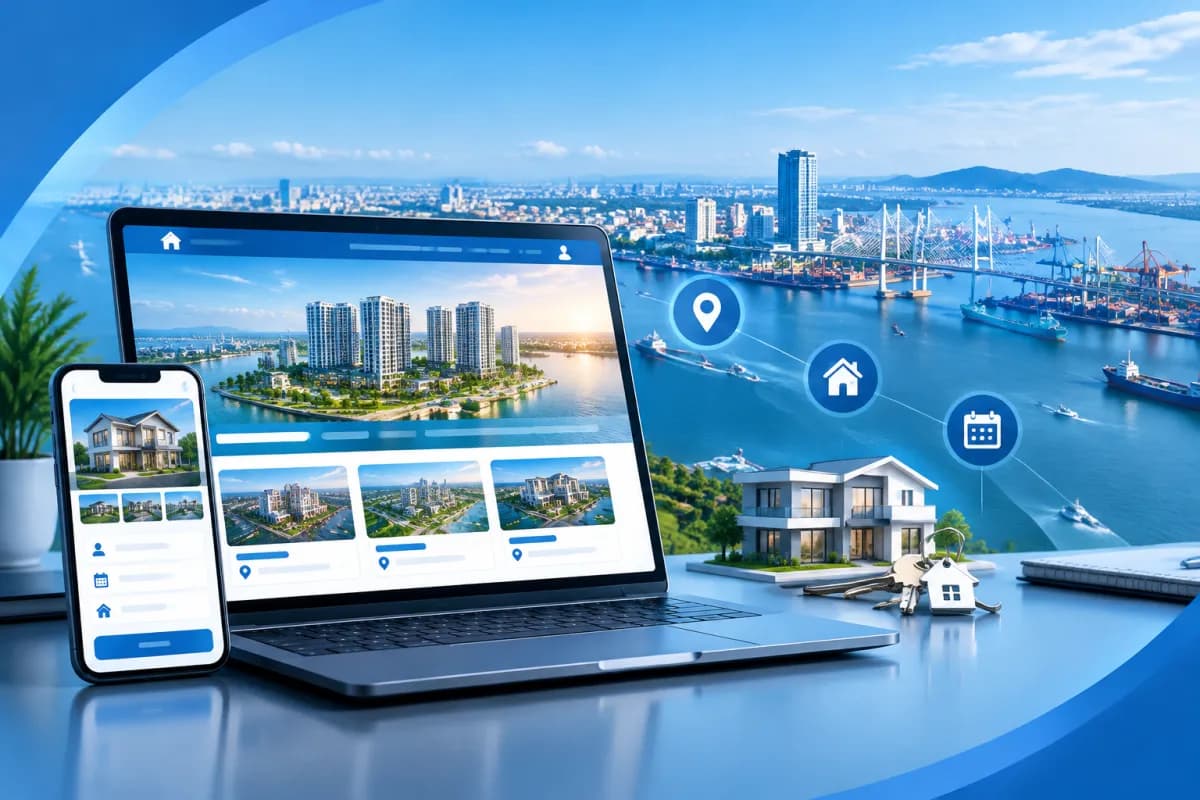
People looking to buy or rent property often want to quickly find out where a project is located, which property types are available, and how to book an in-person viewing. A well-organized website helps businesses present information clearly and guide interested visitors toward the right way to get in touch. That’s why real estate website design in Hai Phong should begin with the customer journey—from searching for a project to booking a viewing—rather than focusing only on an eye-catching interface.
This article explores essential website components, how to build location-based filters, design project pages, and create forms that attract prospective customers. Businesses can use these suggestions to prepare a brief, evaluate their current website, or discuss requirements with a development partner.
What needs should a real estate website address?
A website is an information channel that a business manages directly, allowing customers to browse projects and properties when they need to. Unlike a basic company profile, a real estate website needs to bring content, search tools, and consultation options together in a clear, connected journey.

- For buyers: find projects, locations, property types, and relevant information before getting in touch.
- For sellers or developers: present an organized property portfolio, update availability, and receive consultation requests.
- For sales teams: receive inquiries from people with specific needs so they can follow up proactively.
In Hai Phong, businesses can organize content by the place names customers care about, such as districts, townships, or specific areas. However, location categories should reflect the business’s actual service area and be updated when administrative boundaries or internal classifications change. Don’t assign a project to a location simply to increase its visibility.
A website doesn’t need to have as many features as possible. A clear structure, well-managed data, and a registration button displayed at the right moment are often more useful than a complex interface that’s difficult to use.
Organizing project searches and location filters
Search is an important starting point for users. If customers have to open each project to find out its location or property type, they may abandon the process. Filters should reflect how customers actually choose properties, while avoiding an excessive number of criteria that make the experience cumbersome.

Choose useful filter criteria
Depending on the property portfolio, businesses can consider criteria such as location, property type, price range, area, number of bedrooms, property availability, or project status. Include only attributes for which data is reasonably complete and regularly updated. If prices or status haven’t been verified, present them appropriately rather than displaying information that could mislead customers.
Location filters should move from broad to specific—for example, let users select an area first, then a related project or category. Use consistent names on listing pages, detail pages, and editorial content. Administrators also need data-entry guidelines to prevent the same place from appearing under multiple spellings.
Make search results easy to scan
Each project or property card should highlight the information customers need to decide whether to learn more: name, location, property type, a short description, availability, and an appropriate image. Important details must be readable on mobile devices and shouldn’t rely entirely on text embedded in images.
- Place the search bar or filters somewhere easy to spot.
- Let users quickly clear individual selections and show which filters are currently applied.
- Clearly explain when there are no results and suggest broadening the criteria.
- Check how results display when there are multiple pages or many properties.
If the portfolio is updated regularly, establish a consistent process for adding, editing, hiding, or marking properties as no longer available. Outdated information in search results can undermine trust and lead the sales team to receive inquiries they can no longer handle.
What information should a project page include?
A project detail page helps customers assess whether a property is right for them before booking a viewing. Organize the content under clear headings and prioritize answers to practical questions instead of relying on generic promotional copy.

- Overview: project name, relevant organizations where supported by verified information, property type, and a short description.
- Location: a verified address or area description, with suitable directions if reliable data is available.
- Properties: unit or property type, area, and related attributes based on actual data.
- Status: availability, sales-launch, or consultation information that an assigned team member keeps up to date.
- Images and documents: use materials approved for publication and add captions that explain what they show.
- Frequently asked questions: answer common questions without making claims that haven’t been verified.
Businesses can add a map or directions after verifying accuracy and data usage rights. If reliable information isn’t available, a clear location description is better than an inaccurate map. Content about legal status, construction progress, prices, and policies should be reviewed by a responsible person before publication.
For SEO, each project should have its own page title, description, and URL that accurately reflect its content. Location-based listing pages should offer useful information; don’t create batches of nearly identical pages just to target keywords. This structure helps search engines and readers understand what each page provides.
Designing an effective home viewing request form
The form should ask for enough information for the team to follow up and prepare for the viewing. A form that’s too long creates friction, while one that collects just a single field may not provide enough context to understand the customer’s request. Choose fields based on your actual inquiry-handling process.

A basic form could ask for the customer’s name, phone number, preferred time, and the project or property they’re interested in. Add email, expected budget, or specific requirements only when they help the team handle the inquiry more effectively. Clearly mark optional fields, and make instructions easy to follow on small screens.
Place calls to action in the right context
The “Book a Viewing” button should appear on project pages and alongside relevant property details. On mobile, consider an easy-to-tap contact button that doesn’t obscure the content. Before submitting, customers should know where their request will go and which information is required.
After a form is submitted, display a clear confirmation message. The business should verify that the data reaches the right team, that someone is responsible for following up, and that there’s a process for incomplete or duplicate inquiries. If you use a customer relationship management system, define synchronization rules during the design phase.
Forms should also be designed responsibly: collect only necessary data, explain how it will be used, and restrict internal access. Don’t request sensitive information that isn’t needed to book a viewing.
Mobile experience, administration, and measurement
Many customers visit websites on their phones while searching or speaking with a sales representative. That’s why the entire journey should be tested on smaller screens: finding a project, applying filters, viewing details, and submitting a request. Text, buttons, forms, and images should all be easy to use—not simply scaled down from the desktop version.

Performance also directly affects how easily customers can browse project listings. Optimize image file sizes, load essential page elements first, and test for display issues on popular devices and browsers. Businesses should also establish processes for backups, administrator account permissions, and software updates appropriate to the platform.
Marketing and sales teams should agree on which metrics to track, such as project page views, filter usage, form submissions, and traffic sources. These metrics help identify where users encounter difficulties. For example, if many people view a project but few submit an inquiry, the business can review the content, the location of the registration button, and the form length before making changes to the entire website.
During implementation, LilyTech can work with your business to clarify the project structure, search experience, and customer inquiry workflow before defining the website design scope. Starting with business processes helps ensure features support commercial goals and limits unnecessary additions.
Conclusion: build a website around the customer journey
Effective real estate website design in Hai Phong connects three things: helping customers find projects by location, providing clear information so they can evaluate their options, and making it easy to book a viewing. When data is managed consistently, the mobile experience is tested, and forms connect to the right consultation process, the website becomes a useful business support channel.
Before getting started, review your project portfolio, filter criteria, data sources, content approval requirements, and how your team will handle inquiries. If your business needs to build or improve a real estate website, contact LilyTech for advice on a solution that fits your goals, workflows, and actual implementation scope.

