
 Nguyễn Chính Ngọc Liên
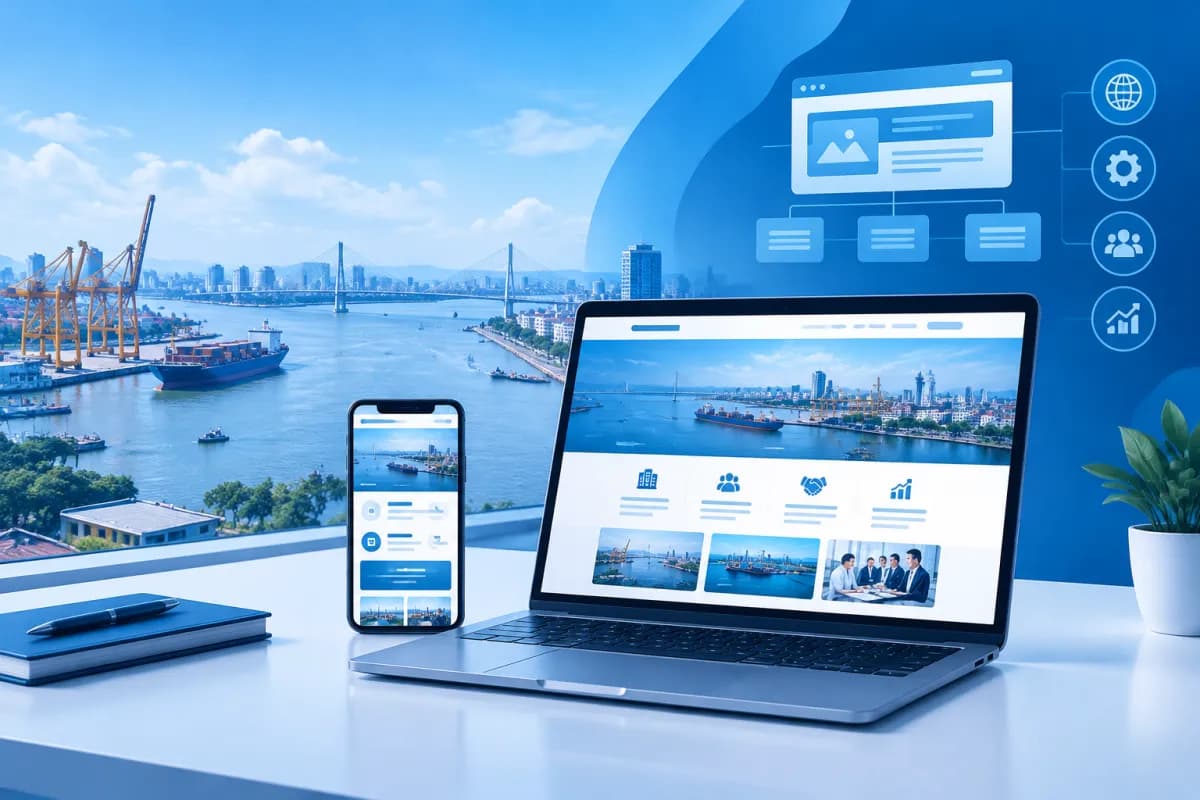
When customers research a business, its website is often where they go to quickly find out what the company does, what experience it has, and how to get in touch. That is why company profile website design in Hai Phong is about more than putting business information online: it means creating a professional, user-friendly touchpoint that helps customers make decisions.
This article explains how to organize key pages, including About, Services, Projects, and Contact. It also offers guidance on content, features, and implementation so businesses can get started with a clear, scalable structure.
What should a company profile website achieve?
A company profile website is an online channel for presenting a business's capabilities, products or services, and contact information. Unlike an e-commerce website, which focuses on product catalogs, shopping carts, and payments, this type of website is generally designed to build trust, explain the value of the business, and encourage prospective customers to request a consultation.

Before designing the interface, businesses should identify their primary visitors and what those visitors need to know. For example, business customers may want to review delivery capabilities, working processes, and featured projects; job candidates may be interested in the work environment, while partners often need legal information or a point of contact.
An effective website should meet several criteria:
- Clear information: Visitors can quickly understand what solutions the business provides and which customer groups it serves.
- Credible evidence: Capabilities are demonstrated through specific descriptions, relevant images, processes, or projects that the business is authorized to publish.
- Easy navigation: Important pages are easy to find on both computers and phones.
- Clear next steps: Visitors know how to call, submit a form, or request a consultation.
- Easy updates: Staff can change content, images, and contact details as needed.
For businesses considering company profile website design in Hai Phong, a website should be viewed as a long-term tool for supporting sales and communications—not simply an online profile that is designed once and then forgotten.
A professional company profile website structure
A good structure helps users find the information they need without navigating through too many steps. Most businesses can start with these main pages: Home, About Us, Services or Products, Projects or Clients, News, and Contact. Depending on the business model, some sections can be combined or split into separate pages.

Home page: introduce your core value at a glance
Within a few seconds, the home page should answer three questions: Who is the company? What does it offer? What should visitors do next? The top section can include a key message, a short description, a relevant image, and a call-to-action button such as “Request a consultation” or “View services.” Avoid generic introductions that do not identify the business's benefits or area of expertise.
Below this section, you can briefly present featured services, differentiators, your working process, selected projects, and contact information. The home page does not need to include every detail; its job is to guide visitors to the right page.
About Us page: tell a story backed by facts
This page should introduce the company's history, direction, areas of expertise, and way of working. Information should be accurate and consistent with other company materials. If you include a vision, mission, or core values, explain them through concrete actions instead of simply listing slogans.
You can add photos of the office, team, or actual activities if the business has permission to use them. For information about company size, capabilities, certifications, or partners, include only verified details that can be made public.
Services page: describe solutions in terms of customer needs
Give each service its own page when there is enough information to cover or when it addresses a distinct customer need. A useful service page typically explains the problem customers face, the solution the business provides, the scope of work, the collaboration process, and frequently asked questions. Explain technical terms in plain language and include a relevant invitation to get in touch at the end of the page.
Projects page: make your capabilities tangible and verifiable
A projects page or portfolio helps visitors understand how the business handles real-world work. Each case can cover the context, requirements, scope of delivery, and results that may be shared. Do not disclose confidential information or use a customer's name or logo without permission. If you do not have projects that can be made public, you can present your process, sample work, or illustrative scenarios clearly labeled as examples.
Design a contact form that makes it easy for customers to get in touch
A contact form is an important conversion point, but a form that is too long can discourage people from submitting it. Ask only for the information your team needs to respond, such as a name, phone number or email address, consultation needs, and a message. Clearly mark optional fields so users can choose whether to complete them.

Place the form on the Contact page and consider adding a button or short form to service pages. Button text should make the next step clear, for example, “Send a consultation request.” After submission, display a confirmation message so users know the process is complete. Businesses also need a process for receiving, assigning, and responding to requests; a form is useful only when submissions reach the right person.
Before launching the website, check that:
- The form works on both phones and computers.
- Email or the system that receives submissions is configured correctly.
- Required fields, error messages, and confirmation text are clear.
- Information about the purpose of data collection and how data is handled is presented appropriately.
- Phone numbers, email addresses, locations, and business hours are consistent across the website.
If customers often communicate with your business by phone or messaging apps, you can also add a quick-call button or the relevant contact channel. However, avoid adding so many floating buttons that they obscure content, especially on small screens.
Website implementation and optimization process
To make a website design project effective, businesses should prepare content and agree on goals before work on the interface begins. The following process can be adjusted to suit the actual scope:

- Define goals: Clarify whether the website needs to support consultation requests, showcase capabilities, recruit staff, or serve several other goals.
- Outline the structure: List the main pages and content groups, and map the user journey from the first visit to getting in touch.
- Prepare materials: Gather company information, service descriptions, images, project portfolios, and contacts who can verify the content.
- Design and develop: Build an interface that reflects the brand, works well on mobile devices, and has clear navigation.
- Test before handover: Review internal links, forms, display, spelling, loading speed, and contact information.
- Update after launch: Add new content, check forms regularly, and monitor which pages attract user interest.
For SEO, each page should have a clear topic, an appropriate title and description, useful content, and a logical heading structure. Related keywords such as business website design, company profile website, company portfolio, and website design services can be used naturally when relevant. Avoid mechanical keyword repetition or creating multiple nearly identical pages just to target search variations.
LilyTech can work with businesses to define their website structure, design their site, and develop the content they need based on their real-world goals. When discussing a project with a provider, clarify the handover scope, how content will be managed, who is responsible for supplying materials, and what support is available after the website goes live.
Conclusion: start with a structure that meets your needs
A professional company profile website should help customers understand the business, verify its capabilities, and get in touch easily. The Home, About Us, Services, Projects, and Contact pages should be built around visitors' needs. Content should be accurate, forms should work reliably, and the website should be kept up to date after launch.

If your business is considering company profile website design in Hai Phong, start by identifying your goals, target customers, and the information you need to present. Contact LilyTech for advice on a website structure and implementation plan that fits your business needs.

