
 Nguyễn Chính Ngọc Liên
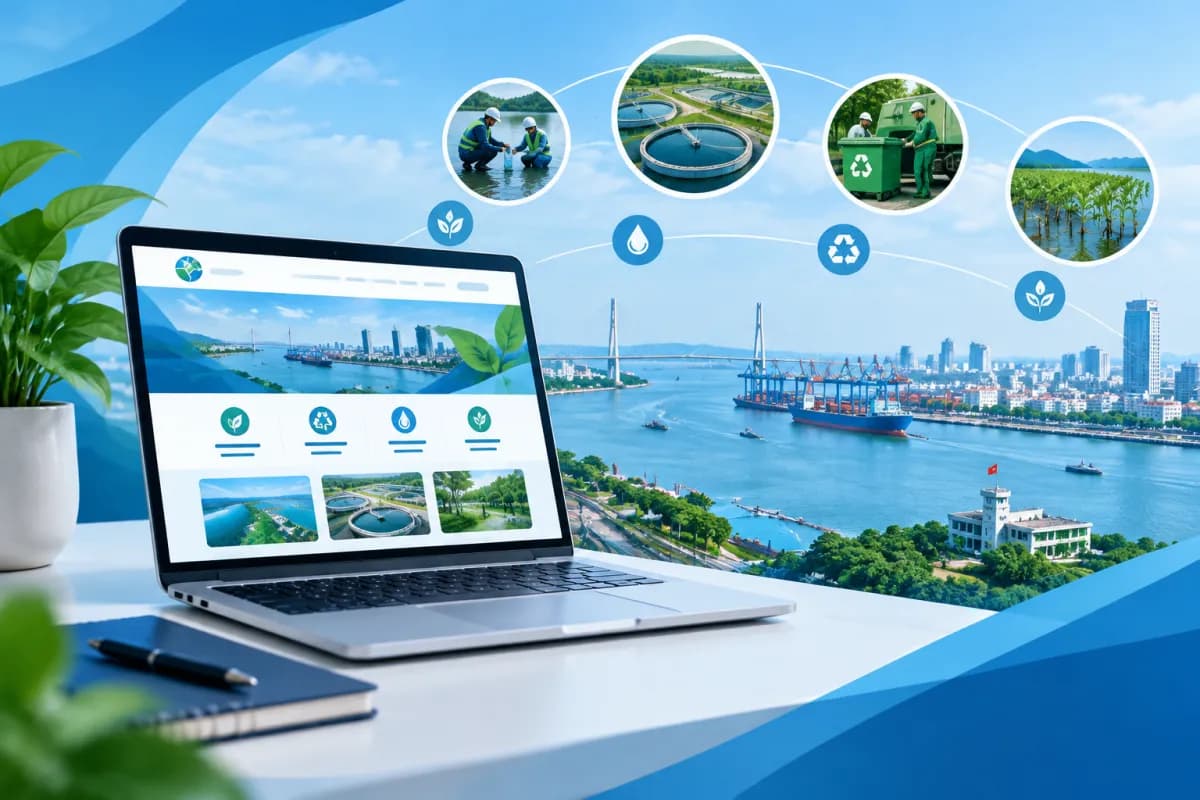
Environmental businesses need a website that does more than look good: it should help customers understand their services, expertise, and legal credentials. For environmental website design in Hai Phong, a site should reflect the specific needs of the industry and provide verifiable information for customers, partners, and anyone looking for a provider.
This article outlines the key elements of an environmental company website, how to present services, certifications, and completed projects, and what content to prepare before development begins. Businesses can use these recommendations to prepare a design brief, assess proposals from web developers, and avoid publishing unverified information.
What needs should an environmental website address?
People looking for an environmental services provider usually want to quickly determine what services the company offers, which types of clients it serves, and whether it has the capabilities to meet their specific requirements. A website should therefore organize information around users’ questions rather than relying on broad claims such as “reliable, professional, and dedicated.”

Depending on its actual scope of work, a company may offer environmental compliance consulting, environmental monitoring, wastewater treatment, air emissions treatment, waste collection, or other technical solutions. These are examples of possible service categories, not a standard list for every company. Only publish services the business actually provides and can clearly explain in terms of process, scope, and delivery requirements.
A well-organized website typically supports three goals:
- Help customers learn: Describe services in clear language, including suitable client types and any information or materials they need to prepare.
- Provide a basis for assessing capabilities: Present company credentials, staff, equipment, certifications, and projects using information that can be verified.
- Encourage inquiries: Make contact details and forms easy to find so customers can submit specific requests.
For businesses targeting customers in Hai Phong, local content should accurately reflect the service area and confirmed address or contact details. Do not name customers, industrial parks, projects, or market figures without reliable evidence and permission to publish.
What content should an environmental website in Hai Phong include?
When planning environmental website design in Hai Phong, businesses should structure their pages around the customer’s research journey. Clear content helps visitors move from discovering services to assessing capabilities and submitting an inquiry, while making it easier for the team to update the site later.

Home and About pages
The homepage should briefly explain what solutions the company provides, which customer groups it serves, and what visitors can do next. It can direct users to key service pages, company credentials, projects, and contact information. The About page should present legal entity details, company history, areas of expertise, and team information when the business has suitable information to publish.
Dedicated service pages
If the company offers several services, create a separate page for each category rather than combining everything in one long paragraph. Each page can explain the problem the service addresses, its scope, the steps involved, what customers need to prepare, and how to request a consultation. This approach helps readers and provides a foundation for targeting related search terms such as “environmental services in Hai Phong,” “environmental monitoring,” or “industrial wastewater treatment,” where these match the company’s actual capabilities.
Capabilities, certifications, and contact pages
The capabilities page can bring together information about staff, equipment, work processes, and relevant credentials. The contact page should display the channels the business uses, such as its phone number, email, address, and inquiry form. If you include a map or directions, verify the location before publishing to avoid confusion.
How to present certifications and projects credibly
Certifications, permits, and professional credentials can help customers determine whether a provider is a good fit. However, a logo or general claim should not be used as a substitute for supporting documentation. Before publishing, verify the document’s name, issuing organization, applicable scope, validity period, and permission to use any related images.

For each certification or document approved for publication, include a brief description to explain its meaning and relevance to readers. If a document contains personal information, internal data, or content that cannot be shared, redact or remove that information. If publication rights are unclear, consult the person responsible rather than uploading the original document to the website.
For project pages, a consistent format makes information easier to read and update. Businesses can include:
- Background: Briefly describe the need or challenge without disclosing customer information unless permission has been granted.
- Scope of work: Clearly identify the work the company performed directly to avoid creating a misleading impression of its responsibilities.
- Approach: Summarize the process, solution, or collaboration milestones if they can be disclosed.
- Results: Include only information, images, and figures supported by documentation and cleared for use.
If no projects have been approved for publication, the business can describe its work process or general capabilities instead of creating sample projects that readers might mistake for real work. LilyTech recommends verifying project content with the subject-matter lead and relevant customers before publishing it online.
A website development process suited to environmental businesses
To keep a design project on track, businesses should prepare their requirements and materials before interface design begins. The following process can be adapted to the company’s size, number of services, and existing systems.

- Define the goals: Decide whether the website should primarily present capabilities, receive consultation requests, support recruitment, or serve several goals. Clear priorities make it easier to choose the right structure and features.
- Take inventory of content: Gather company information, service listings, images, professional credentials, and project details. Note what has been verified and what still needs approval.
- Map the pages: Identify the main pages and how users will navigate between services, capabilities, projects, news, and contact information. Avoid creating too many similar sections that make information harder to find.
- Design and build: Choose a design that fits the brand, works well on mobile devices, and makes important actions easy to use.
- Test before launch: Review the content, forms, contact details, loading speed, display across devices, and basic security settings.
- Update after handover: Assign owners for news, service information, and credentials; regularly check that information remains valid and remove outdated content.
When preparing the brief, businesses should agree on who will approve technical content and who will manage the website. This helps prevent technical information from being misinterpreted or expired documents from remaining online.
SEO and user experience checklist
An attractive design alone is not enough to help customers find and use a website. Use the following checklist to review key elements before launch:

- Each page’s title and description accurately reflect its content and do not repeat keywords mechanically.
- Service information uses accurate terminology and explains it clearly for non-specialists.
- Navigation is clear, making service, capabilities, and contact pages easy to reach.
- The design adapts to phones, tablets, and desktop computers.
- Forms request only necessary information and explain how to submit a specific inquiry.
- Images are cleared for use, have appropriate alternative text, and do not expose sensitive data.
- Company details, address, and contact channels are consistent throughout the website.
- There is a plan for publishing expert content and periodically reviewing important pages.
For SEO, organize content around relevant topics and real customer needs instead of repeating keywords in every paragraph. The primary keyword can appear naturally in the introduction, a relevant heading, and the conclusion. Related terms such as “environmental company in Hai Phong,” “environmental consulting services,” or “environmental company credentials” should be used only when the page genuinely covers those topics. Sustainable SEO combines useful content, a clear structure, and a good browsing experience.
Conclusion: Build a clear, evidence-based environmental website
An effective environmental website accurately describes services, presents certifications only within the scope permitted, and showcases projects using verified information. When content, structure, and user experience are planned together, customers can assess the company’s capabilities more easily and submit inquiries with the right context. This also provides an important foundation for long-term SEO and communications.
If your business is looking for environmental website design in Hai Phong, LilyTech can advise on content structure, interface design, and website development tailored to your practical goals. Contact LilyTech to discuss your needs, service scope, and the materials your business is ready to publish.

