
 Nguyễn Chính Ngọc Liên
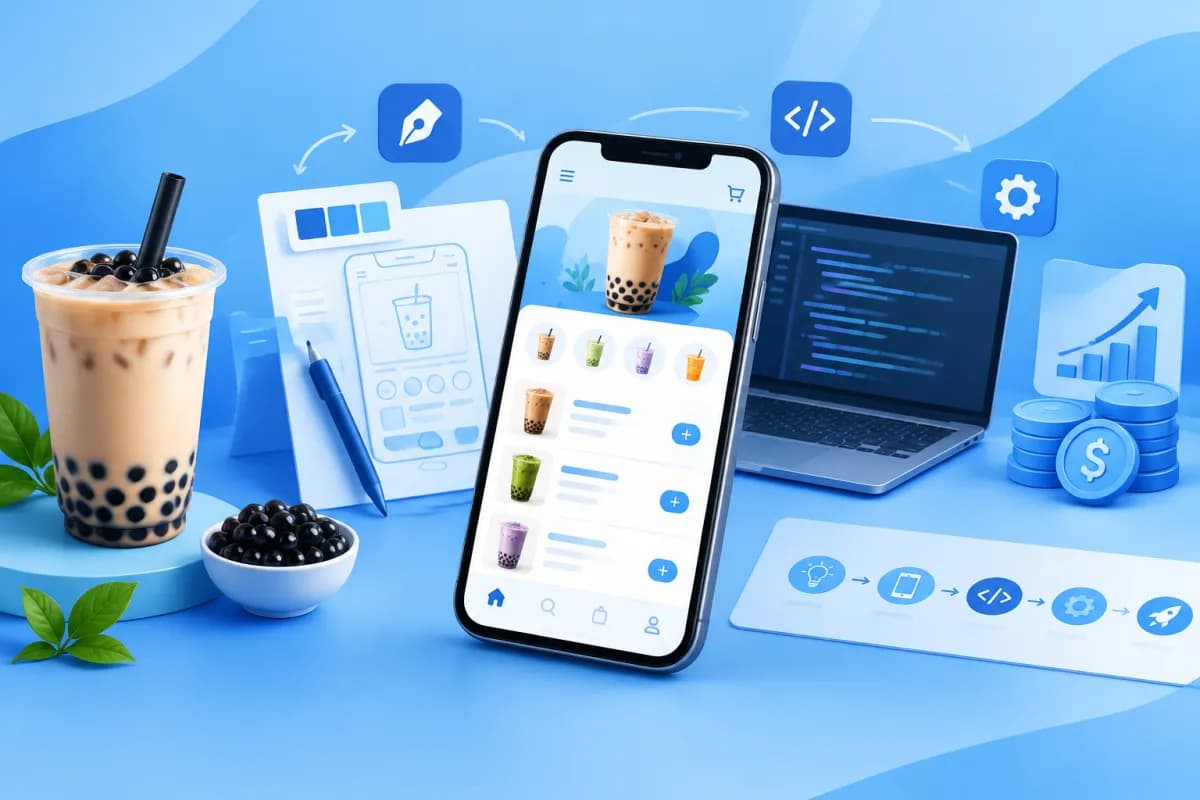
As more people order drinks on their phones, bubble tea brands have an opportunity to reach customers quickly and conveniently. Rather than relying entirely on a physical store or third-party delivery platforms, businesses can build their own sales and customer-service channel.
So, what is a bubble tea app, what does the development process involve, and which factors affect the cost? This article helps business owners and marketers understand the essential features, implementation steps, and how to plan an appropriate budget.
What is a bubble tea app, and what are its benefits?
A bubble tea app is a mobile application that lets customers browse a menu, customize drinks, place orders, pay, and track their orders. Depending on the business model, it can serve a single store, a brand with multiple locations, or a system connecting multiple stores.

Unlike an app that simply displays a menu, a fully featured solution typically includes a customer-facing app and a management system for the business. Staff and managers can receive orders, update menu items, track revenue, manage promotions, and view customer information from a centralized platform.
Investing in an app can help a brand:
- Create a direct ordering channel: Customers can place orders, choose a store, and receive their drinks without having to contact the business through multiple channels.
- Encourage repeat purchases: Points, discount codes, and relevant notifications can encourage customers to order again.
- Manage data more effectively: Businesses can track best-selling items, peak periods, and ordering behavior to inform operational decisions.
- Deliver a consistent brand experience: The interface, content, and promotions can reflect the brand’s identity rather than being entirely constrained by a third-party platform.
An app does not automatically guarantee higher sales. Results also depend on product quality, ease of use, marketing, and operational execution. Businesses should therefore identify the problem they need to solve before starting app development.
Essential features for a bubble tea app
The feature list should reflect how the store sells its products and serves customers. An app with too few features may not solve the problem, while adding unnecessary functions from the outset can increase development time and costs.
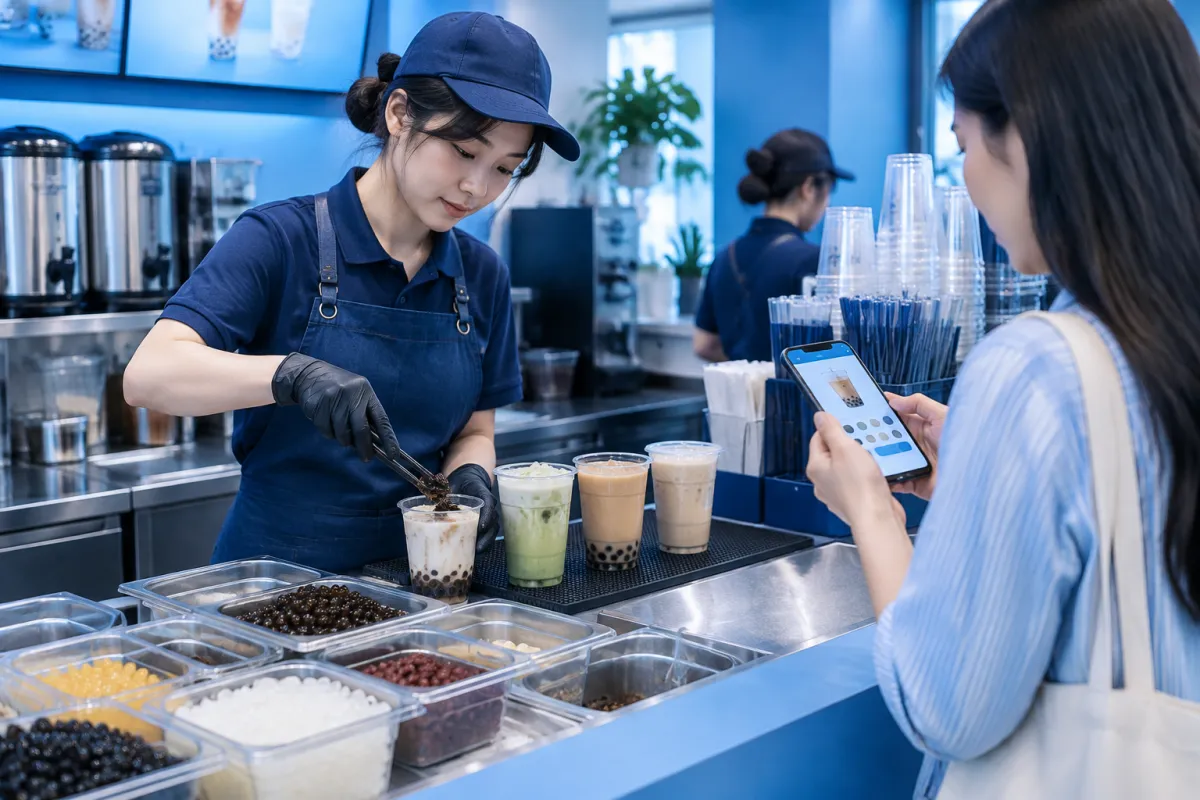
Customer-facing features
- Registration and sign-in: Support phone numbers, email, or sign-in methods suited to the target customer base.
- Easy-to-browse menu: Show photos, prices, ingredients, sizes, and availability for each item.
- Drink customization: Let customers choose sugar and ice levels, toppings, cup sizes, and special instructions.
- Ordering and payment: Support in-store pickup or delivery. Choose payment methods based on business needs and available providers.
- Promotions and rewards: Let customers view deals, transaction history, reward points, and membership benefits.
- Order status tracking: Provide updates such as received, being prepared, ready for pickup, or out for delivery.
Management and operations features
Store teams need tools to manage menu items, prices, availability, orders, locations, promotions, and staff accounts. For a multi-location chain, the system should support role-based permissions, configurable operating areas, and reports by store. Businesses can also consider integrations with POS systems, accounting software, CRM platforms, or delivery providers if their current workflows require synchronized data.
Push notifications, item reviews, and chatbots can be useful, but should only be included when the business has a specific plan for using and managing them. For example, sending notifications too frequently may prompt customers to disable them, reducing the effectiveness of the app as a customer-engagement channel.
The bubble tea app design process, from requirements to launch
A well-defined process helps prevent continual changes to project scope and makes it easier to manage timelines. The steps can be adapted to the project’s scale, but typically include the following stages:

- Define goals and requirements: Clarify whether the app is intended to support sales, a loyalty program, chain management, or a combination of goals. Document user groups, the current ordering process, existing challenges, and desired outcomes.
- Analyze business requirements and scope: Map the customer journey from opening the app to completing an order. Define how to handle cancellations, unavailable items, store changes, refunds, and other special cases. Then distinguish must-have features from those that can be added later.
- Design the user experience and interface: Organize the information, map user flows, and design screens that reflect the brand. The project team should test prototypes with representative users to identify confusing interactions before development begins.
- Develop the app and management system: The technical team builds the app for the agreed platforms, the management interface, and any required integrations. During this stage, the business should prepare menu content, membership policies, pricing rules, and store data.
- Test and approve: Test across different devices, screen sizes, and usage scenarios. Check the accuracy of pricing, drink options, promotional codes, payments, notifications, and order synchronization.
- Launch and improve: Publish the app to the appropriate app stores, train staff, and promote it to customers. After launch, monitor bugs, order completion rates, repeat visits, and feedback to plan updates.
Before signing a contract, clearly agree on deliverables, acceptance criteria, source-code ownership, warranty period, ongoing maintenance costs, and post-launch support processes. These details help both parties plan for future expansion or changes to the app.
What affects the cost of designing a bubble tea app?
There is no fixed price that applies to every project. Costs depend on the number of features, level of customization, platforms, and integration requirements. As a general starting point, a minimum viable app with basic ordering features may cost tens of millions to over one hundred million Vietnamese dong. A heavily customized product for a large chain or one connected to multiple systems may cost several hundred million Vietnamese dong or more. These are indicative estimates, not a substitute for a quote based on detailed requirements.
Factors that commonly affect the budget include:
- Platforms and development approach: Starting with one platform, building separate iOS and Android apps, or using cross-platform technology each involves a different scope of work.
- Number and complexity of features: A simple points system differs from a multi-tier membership program with flexible promotion rules or reward redemption.
- Design and level of customization: A template-based interface typically has different costs from a custom brand design that includes multiple rounds of usability testing.
- Management system and number of locations: Managing one store is simpler than operating a system with role-based permissions, location-specific menus, centralized reporting, and complex coordination workflows.
- Third-party integrations: Payment gateways, POS, CRM, accounting, maps, or delivery services may involve setup, testing, and ongoing fees.
- Post-launch operations: Server hosting, monitoring, maintenance, operating-system updates, and technical support should be included in the total cost of ownership.
To keep costs under control, businesses can start with an MVP focused on essential functions: viewing the menu, placing orders, receiving orders, and basic management. Once real usage data is available, prioritize upgrades that can improve the customer experience or business performance. When comparing quotes, assess the scope of work, support quality, and potential additional costs—not just the initial price.
Conclusion: Start with the right plan to create real value
Understanding what a bubble tea app is is just the first step. To make the app useful, businesses need to define clear goals, design a convenient ordering flow, choose the right set of features, and plan for operations after launch. Costs vary by business scale and integration requirements, so prepare a clear brief before requesting a quote.
LilyTech provides consulting, design, and app development services tailored to business needs. Contact LilyTech to discuss the process, feature scope, and a budget approach suited to your bubble tea business.

