
 Nguyễn Chính Ngọc Liên
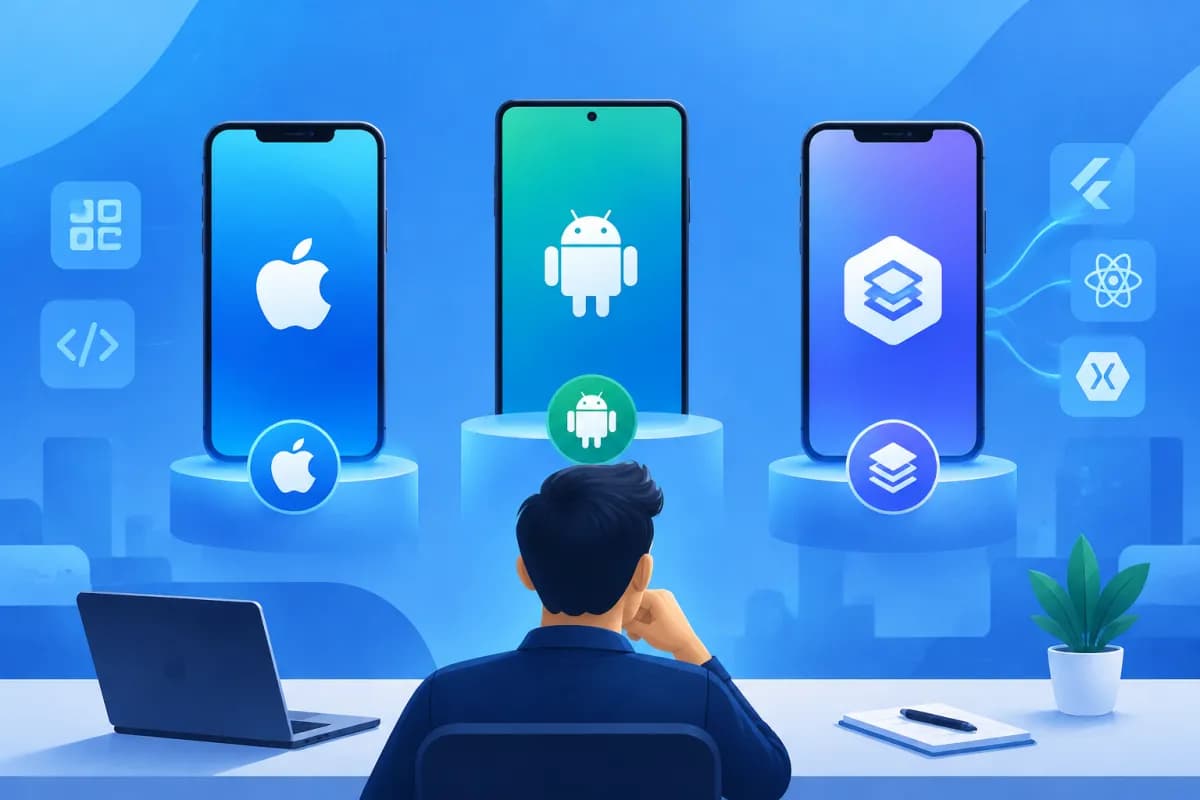
When deciding to build an app, businesses typically face three options: develop specifically for iOS, develop specifically for Android, or build a cross-platform app. Each approach has distinct strengths in user experience, cost, time to market, and scalability. There is no single best choice for every business; the right option depends on your target customers, business goals, and available resources. Choosing the right approach to mobile app development starts with understanding these priorities.
This article examines the key differences between mobile app development approaches and offers a framework to help businesses make data-driven decisions instead of simply following technology trends.
An overview of three popular mobile app development approaches
Native apps are developed specifically for one operating system. iOS apps typically use Swift or Objective-C, while Android apps use Kotlin or Java. Because these apps are built with each platform’s tools and standards, development teams can make deep use of device features and tailor the experience to the operating system.

With cross-platform development, teams use a shared platform or toolkit to build apps for both iOS and Android. Popular technologies include Flutter and React Native. This approach can enable substantial code reuse, but it does not mean every feature can be implemented identically without platform-specific work.
Businesses can also build a web app or Progressive Web App (PWA). Users access it through a browser instead of downloading a full app from an app store. This is worth considering when the main goal is to provide content or basic online services and the business wants to test an idea quickly. However, its user experience and access to device features may differ from those of a native app.
Developing specifically for iOS: when does it make sense?
iOS may be the priority if customer data shows that most target users have an iPhone or iPad. This may apply to certain premium service segments, business customers, or markets with a high share of Apple devices. Rather than developing for both platforms at once, a business can focus its budget on launching first on the platform that matters most.
Native iOS apps typically deliver an experience that feels consistent with the Apple ecosystem, especially when a product needs deep integration with device features, high performance, or a complex interactive interface. Teams can also exercise greater control over how the app operates and how well it follows the platform’s design standards.
The trade-off is the cost of maintaining a separate codebase and the need for iOS expertise. If the business later wants to reach Android users, it may need to invest in a separate version. An iOS-only strategy is therefore best suited to businesses with a clearly defined target audience, a controlled initial launch scope, and a specific business case for prioritizing the Apple ecosystem.
Developing specifically for Android: broader user reach
Android runs on a wide range of devices and can help businesses reach a large, diverse user base across price points and usage habits. It may be a sensible priority for mass-market apps, services that need broad reach, or products targeting markets where Android users make up a large share of the audience.
Native Android development makes it possible to optimize an app for the platform, take advantage of hardware features, and create an experience suited to the Android ecosystem. When an app has specific requirements for performance, background operation, device integration, or a complex interface, a native solution can give the team greater control.
On the other hand, the Android market includes many manufacturers, screen sizes, and operating system versions. Businesses should plan to test representative groups of devices rather than checking the app on just one model. Tracking bugs, releasing updates, and ensuring stable performance across common configurations are important parts of the total cost of ownership. An Android-only strategy makes sense when customer data confirms that Android is the primary platform and the business has the resources to maintain quality across a diverse ecosystem.
Cross-platform development: optimizing launch time and budget
Cross-platform development is often appealing to businesses that need to be available on both iOS and Android but want to manage their initial budget and timeline. Sharing code can reduce the effort required to build common features, shorten development time, and help product teams deliver features more consistently across both versions.

This approach can work well for e-commerce apps, booking apps, service management tools, loyalty programs, or products that need to validate market demand quickly. Businesses can launch an initial version, gather real-world feedback, and prioritize improvements based on user behavior instead of making a major investment before confirming product-market fit.
However, cross-platform development does not mean lower costs in every situation. Features that require deep operating system integration, unusually high performance, or a distinct interface may need additional native code. If an app relies heavily on device features, businesses should assess early whether the chosen technology supports them and whether the team can handle native development if needed.
For this reason, compare the total cost across the product lifecycle: design, development, testing, release, maintenance, and expansion. Cross-platform development tends to be most effective when most business logic and interface elements can be shared, and differences between operating systems are not central to the product.
How to choose the right platform for your business
Before choosing a technology for mobile app development, businesses should start with their users and business needs. These questions can help narrow down the options:

- What devices do your customers use? Use website analytics, customer surveys, market research, or data from existing products. Don’t rely on assumptions based only on your team’s personal habits.
- What is the app’s primary goal? Is it to increase revenue, improve customer service, digitize a process, or create a new service channel? The goal determines which features and technical requirements to prioritize.
- How deeply does the app need to integrate with devices? Requirements such as image processing, location services, Bluetooth, push notifications, or background operation should be assessed individually to determine which development approach is the best fit.
- What are your budget and launch timeline? Include operating and maintenance costs after release, not just the budget for building the first version.
- How will your team maintain the product? Assess your in-house skills, development partners, testing processes, and plans for updates as operating systems change.
- Do you need to validate the market or build a long-term product? If you need to test quickly, prioritize a lean feature set. If the product already requires complex performance and user experience, carefully assess native or hybrid approaches.
A practical roadmap often starts with user research and defining a minimum viable product (MVP). A business can launch on the platform most widely used by its target audience, or choose cross-platform development if it needs to test on both operating systems at the same time. Once the team has data on installs, usage, conversions, and feedback, it can make informed decisions about expansion and optimization.
Conclusion: Choose technology for your goals, not trends
iOS is a good fit when a business prioritizes customers who use Apple devices and wants an experience optimized for that ecosystem. Android offers broader reach across device types but requires a suitable testing plan. Cross-platform development can shorten timelines and enable code reuse, especially when a business needs to reach both operating systems on a limited budget. However, specialized requirements still need to be evaluated in terms of technical feasibility and cost.
Effective mobile app development balances target customers, features, timeline, budget, and long-term maintainability. LilyTech can support businesses in analyzing their needs, selecting a platform, designing the user experience, and creating an app development roadmap. Contact LilyTech for advice on an approach that fits your business goals and resources.

