
 Nguyễn Chính Ngọc Liên
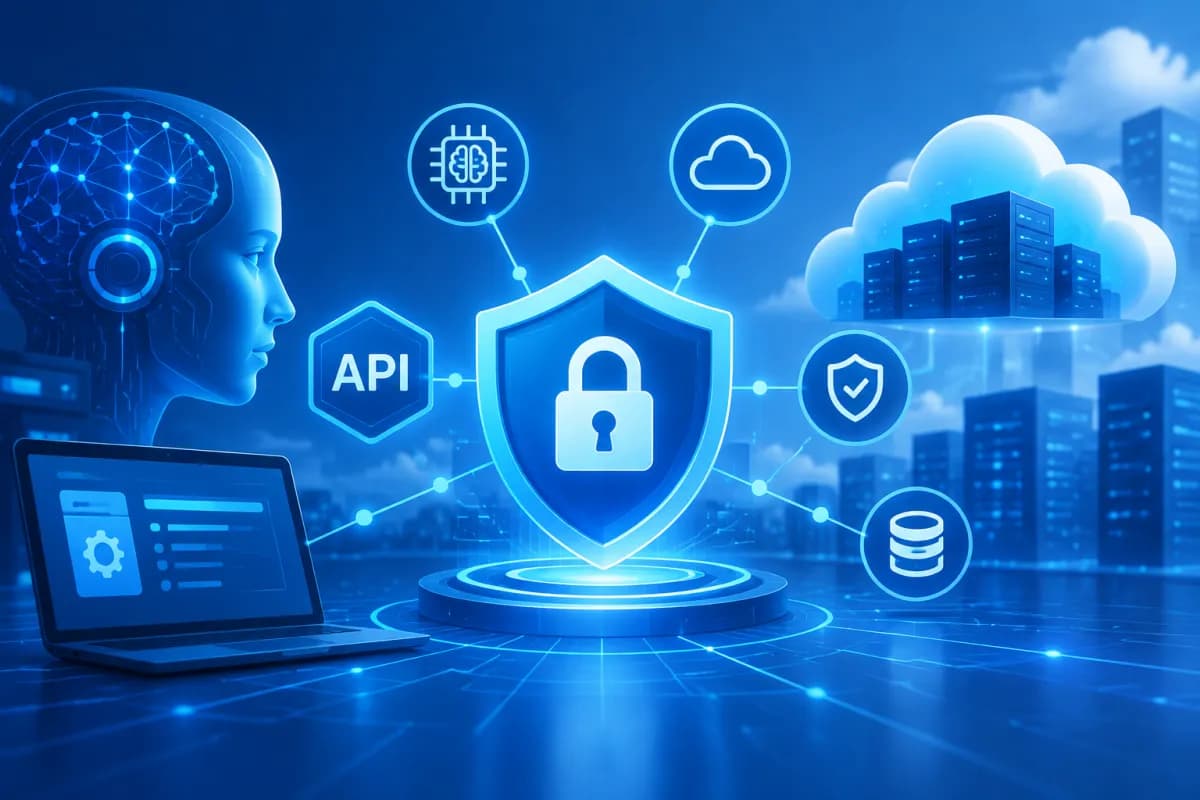
APIs are a vital connection layer between websites, mobile apps, internal platforms, and third-party services. As businesses move to cloud computing, expand their digital ecosystems, and adopt artificial intelligence (AI), both the number of APIs and reliance on them are growing rapidly. This creates new opportunities for innovation, but also expands the attack surface and makes data control more complex.
As a result, API security trends in the age of AI and cloud computing now go beyond installing a firewall or checking for errors before launch. Businesses need to protect APIs throughout their lifecycle—from design and development to operations—while combining automation, continuous monitoring, and centralized governance. This article examines the impact of AI and cloud environments, along with practical measures organizations can use to build an effective security strategy.
Why has API security become a priority in the digital age?
APIs enable systems to exchange data and functionality in a structured way. A scheduling app might call APIs to authenticate users, check availability, process payments, and send notifications. Each connection can become an access point to important data or business processes if it is designed or configured insecurely.

Risks increase when businesses deploy multiple platforms at once: internal APIs, partner APIs, public APIs, and interfaces connecting cloud services. Older APIs may be forgotten after a new version replaces them; test APIs may be inadvertently exposed to the internet; or access permissions may be broader than necessary. These issues are difficult to detect if teams rely solely on inventories maintained manually by developers.
Unlike a typical website, APIs often exchange structured data that machines process directly. Attackers can automate large volumes of requests, change identifiers to access other people’s data, or misuse legitimate functionality in unexpected ways. Even an authenticated API can be exploited if authorization, rate limiting, or input validation is inadequate.
For businesses, the consequences go beyond service disruption. An API incident can expose customer information, enable transaction fraud, drive up infrastructure costs, lead to compliance violations, and damage brand reputation. API security should therefore be treated as part of risk management and digital business strategy—not as the responsibility of a technical team alone.
How AI and cloud computing are changing the risk landscape
AI drives connectivity and creates new forms of risk
Generative AI and machine learning models often rely on APIs to receive data, call inference services, retrieve information, or connect to external tools. An AI-powered customer service system may interact with multiple APIs behind the scenes. If one component is compromised or misconfigured, the impact can spread to related systems.
AI is also accelerating automation on both sides. Security teams can use AI to classify alerts, identify unusual behavior, and assist with code reviews. Conversely, attackers can use automated tools to survey services, test many variations of requests, and find weaknesses faster. AI does not replace fundamental security principles; it makes applying them consistently and promptly even more important.
Businesses also need to control the data sent to AI services through APIs. Sensitive information may be transmitted unexpectedly if an application does not filter data, limit its use to an intended purpose, or control access. When integrating third-party models, businesses need to understand what data is sent, how it is stored, and who can access it.
Cloud computing offers flexibility but creates a distributed environment
Cloud computing makes services faster to deploy and scale, but APIs may also be spread across multiple accounts, deployment regions, container clusters, and platforms. Microservices architectures create numerous connections between components, while hybrid systems that combine cloud environments with on-premises data centers make it harder to see all traffic.
Misconfiguration is a common cause of API exposure: publicly accessible service endpoints, access keys stored in source code, overly broad service account permissions, or test environments that are not protected like production. Meanwhile, APIs may be created and updated continuously through automated development workflows. If asset discovery and security controls fail to keep pace, blind spots emerge.
API security trends businesses should pay attention to
Maintain a complete API inventory
To protect APIs effectively, businesses first need to know which APIs they have, which systems they belong to, who is responsible for them, and what types of data they process. One emerging trend is to build a centralized API inventory that automatically discovers APIs from network traffic, API gateways, source code repositories, and cloud environments. The inventory should distinguish active APIs from outdated APIs, older versions, and APIs without a clearly assigned owner.

Continuous discovery matters more than a one-time inventory. A new API can go live with a single deployment, while an older API may continue receiving traffic even after being replaced. With a reliable asset inventory, technical teams can prioritize risk assessments and plan to retire interfaces that are no longer needed.
Build security in from the design stage
The shift-left approach brings security controls into the development process early. Before writing code, product and engineering teams should determine what data will be exchanged, who will make calls, what minimum permissions are needed, and how errors will be handled. API specifications should be reviewed to identify sensitive fields, functions that could be misused, and unclear access permissions.
During development, teams can automate checks of source code, dependencies, infrastructure configuration, and API specifications. Tests should cover authentication, object-level authorization, input validation, rate limiting, and error handling. Adding these checks to continuous integration and deployment helps identify issues early and reduces the cost of fixing them after a service is live.
Move from perimeter protection to layered controls
API gateways and web application firewalls remain important, but they cannot replace controls at the individual service level. Businesses need to combine strong authentication, granular authorization, encryption in transit, secrets management, and input validation. Each service should have only the permissions needed to do its job rather than credentials with broad access.
In distributed architectures, the zero-trust model emphasizes verifying each request based on identity, context, and policy. This is especially useful when application components run across multiple environments. Credentials should be rotated regularly and stored in a secrets management system rather than placed directly in source code or unprotected configuration files.
Monitor APIs with data, automation, and AI
Security does not end when an API goes live. Businesses need to monitor traffic for unusual behavior, such as an account suddenly sending a high volume of requests, accessing many unrelated records, or calling rarely used functions. Logs need enough detail for investigations, but they should be designed to avoid recording passwords, access tokens, or unnecessary sensitive data.

Behavior analytics tools can establish a baseline for normal traffic and then flag significant changes. AI can help prioritize alerts by risk level, group related events, and shorten analysis time. However, automated results need to be validated; too many false alerts may cause operations teams to miss important signals.
For effective monitoring, API data should be connected to security information and event management systems, identity management systems, and infrastructure observability tools. When signs of an attack are detected, teams need a clear response process: determine the scope of impact, revoke credentials, limit traffic, isolate services if necessary, and notify relevant parties as required.
Several metrics can help businesses assess progress, including the time taken to discover new APIs, the proportion of APIs with an assigned owner, the number of outdated APIs, time to remediate vulnerabilities, and the proportion of services using policy-based authentication and authorization. Metrics should be tied to specific operational objectives rather than simply counting alerts or security scans.
A practical roadmap for implementing API security
Not every business needs to invest in a complex platform all at once. A prioritized roadmap can help address immediate risks and build a foundation for future expansion:
- Inventory and classify: Create an API list and identify deployment environments, owners, data handled, and importance to business operations.
- Assess risk: Prioritize public APIs, APIs that handle personal data or payments, and interfaces connecting to AI services or third parties.
- Standardize design: Set requirements for authentication, authorization, encryption, input validation, traffic limits, and version management.
- Automate testing: Integrate code, configuration, and API security testing into development workflows, and define how to respond when a check fails.
- Establish monitoring and response: Centralize necessary logs, set alert thresholds, and run exercises for scenarios such as exposed access keys or unusual data access.
- Train and improve: Help development, operations, and marketing teams understand their responsibilities when using APIs; review policies regularly as architecture and regulations change.
To avoid slowing innovation, security policies should be automated where appropriate and clearly explained to each team. For example, development teams need to know which APIs may be public, how to request new permissions, and what criteria determine when an older version will no longer be supported. When responsibilities and processes are transparent, security can become a natural part of deployment speed rather than a final approval gate.
Conclusion: Protect APIs proactively for sustainable growth
AI and cloud computing are changing how businesses build, deploy, and operate APIs. Opportunities for innovation come with a need to maintain a complete API inventory, build security in from the design stage, enforce least-privilege access, and monitor continuously. AI can improve detection and response, but its effectiveness still depends on data, processes, and people.
For businesses expanding their digital platforms, API security should be viewed as an investment in protecting operations, customer data, and brand reputation. LilyTech can work with businesses to advise on, design, and implement technology solutions suited to their practical needs. Contact LilyTech for guidance on building a secure, flexible digital system ready to grow—using the latest API security trends in the age of AI and cloud computing.

