
 Nguyễn Chính Ngọc Liên
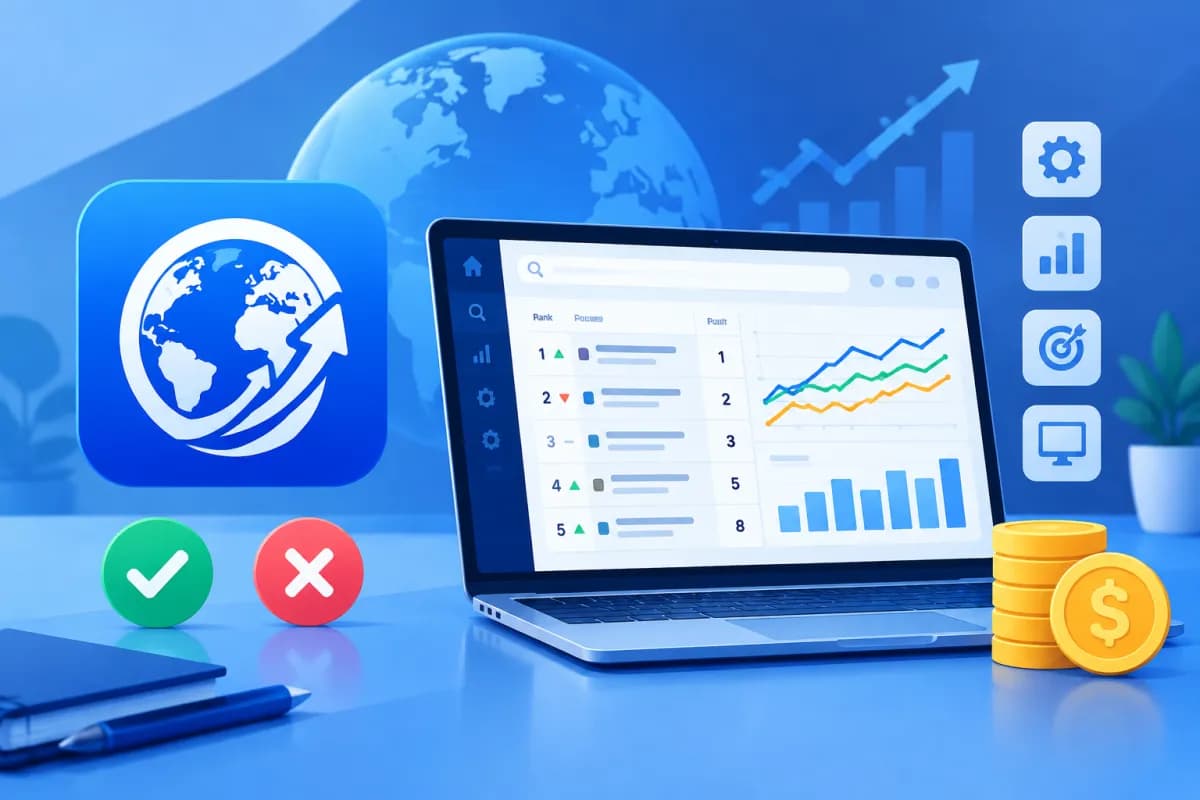
In SEO, keyword rankings change over time and vary by location, device, and many other factors. Businesses therefore need a sufficiently detailed tracking tool to see where their website appears in search results, how competitors are changing, and whether a campaign is making progress. Advanced Web Ranking (AWR) is a platform designed to support this work. This review of Advanced Web Ranking: Features, Pros, Cons, and Pricing can help you assess whether it fits your needs.
This article reviews Advanced Web Ranking’s standout features, strengths, limitations, and the factors that affect its cost. It can help business owners and marketers determine whether the tool suits their organization’s size, SEO workflow, and budget.
What Is Advanced Web Ranking?
Advanced Web Ranking is an SEO tool focused on tracking keyword rankings across search engines. The platform helps users monitor website positions over time, compare them with competitors, and analyze search results in specific markets or locations. Depending on how a project is configured, users can track data by country, region, city, language, and device type.
Unlike all-in-one SEO platforms that may include keyword research, backlink analysis, and website audits, AWR has a clear strength in rank tracking and ranking reports. It suits teams that need organized ranking data to evaluate SEO performance, report to clients, or monitor multiple websites at once.
Keep in mind that rankings are only one SEO metric. A high position does not automatically mean more traffic, leads, or revenue. Businesses should combine AWR data with Search Console, traffic analytics tools, conversion data, and content quality assessments to get a more complete picture.
Key Features of Advanced Web Ranking
Flexible Keyword Rank Tracking
Advanced Web Ranking’s core feature is recording keyword positions in search results. Users can group keywords by product, service, content topic, or market, then monitor changes over time. Grouping makes it easier for SEO teams to identify which groups are improving, which are losing ground, and which content should be prioritized for optimization.

Location and device configuration is useful for businesses with customers in multiple areas or those doing local SEO. Rather than relying on a single overall figure, teams can explore differences between markets and identify queries that produce different results on phones and computers.
Competitor and SERP Analysis
AWR lets users compare their website’s rankings with those of tracked competitors. This data helps businesses identify which keywords competitors appear for, how large the ranking gaps are, and where there may be opportunities to compete. Combined with content and search intent analysis, these insights can inform topic planning or landing page adjustments.
The tool also provides information about elements on the search engine results page, commonly known as SERP features, depending on the search engine, market, and configuration. Tracking these elements helps SEO professionals understand that search results include more than traditional organic links. However, seeing a SERP feature does not mean a website owns that feature; check the reports and actual results for each query.
Reporting, Integrations, and Workflow Scalability
For agencies or marketing teams that need to share results regularly, reporting is essential. Advanced Web Ranking supports report creation for tracking progress and sharing results with clients or internal teams. Options for branding, delivery schedules, formats, and customization may depend on the current plan.
The platform offers data connection and export capabilities to feed information into reporting workflows, analytics, or internal systems. Before subscribing, businesses should check the specific integrations, API limits, access permissions, and terms available with each plan. If you need to connect data to a data warehouse or custom dashboard, confirm technical feasibility using official documentation and test it on a sample project.
Advantages of Advanced Web Ranking
- Specialized rank tracking: Focuses on a specific SEO need, helping teams organize and review keyword data systematically.
- Market-specific configuration: Tracking by location, language, or device is useful for businesses operating in multiple areas and running SEO campaigns across markets.
- Competitor comparison: Competitive ranking data helps identify gaps and opportunities instead of showing only how your own website is performing.
- Useful for recurring reports: Reporting features can help agencies and marketing teams reduce manual data compilation, depending on how they are configured.
- Helpful for managing multiple projects: Businesses and service providers can centralize data from multiple websites and keyword groups in one tracking workflow.
The practical value of these advantages depends on how you use the tool. For example, detailed reports are only useful when the team agrees on KPI definitions, update frequency, and how to interpret changes. If you collect rankings without connecting them to traffic, content goals, or conversions, the data may not lead to specific decisions.

Limitations and Costs to Consider
Limitations to Be Aware Of
Advanced Web Ranking may not replace an entire SEO toolkit. Businesses that need in-depth keyword research, backlink profile analysis, technical audits, or content management in a single platform may need to combine AWR with other tools. This adds costs and requires processes for reconciling data.

Search engine rankings can change quickly, and the results users see are also affected by location, device, timing, and query settings. For that reason, a single check or short-term change should not be treated as a final verdict on SEO performance. Teams should choose an appropriate measurement frequency, track trends, and compare them with business metrics.
New users may need time to get familiar with the number of projects, keywords, reporting options, and location settings. If an organization does not have a clear SEO process, purchasing a specialized tool may not improve results right away. Decide in advance who will manage the data, what decisions it will inform, and who will receive the reports.
Costs Depend on How You Use It
Advanced Web Ranking’s cost may vary depending on the subscription plan, tracking limits, and included features. Factors to consider typically include the number of keywords, websites or projects, update frequency, search engines and locations to track, client reporting needs, and options for exporting or integrating data. The provider may update prices and plan terms over time, so check the official pricing page directly before budgeting.
Don’t compare list prices alone. Calculate the total cost of ownership, including setup time, staff time, additional tools, and the effort required to prepare reports. Agencies should also consider the number of clients, level of report customization, and access controls. Small businesses should start with a prioritized keyword list rather than tracking thousands of queries without a plan for using the data.
How to Decide Whether Advanced Web Ranking Is a Good Fit
Before subscribing, businesses should define what they need to measure. If you need to track rankings for many keywords across multiple locations, compare competitors, and standardize client reports, AWR may be worth evaluating. If you only need to check a few simple queries or have a very limited budget, a lighter solution may be a better fit.
- List your requirements: Specify the number of websites, keywords, locations, devices, and people who need to view reports.
- Choose a test keyword set: Include branded keywords, service keywords, local queries, and a few competitive keywords to assess how useful the data is.
- Compare with other sources: Check trends in AWR against Search Console and traffic data, and note differences in measurement methods.
- Review the reporting workflow: Assess whether decision-makers can understand the reports and how much manual work they could save.
- Budget for your actual scale: Plan for current needs and potential growth, avoiding a plan that is either larger than necessary or lacks capacity after a few months.
If a trial or evaluation access is available, test the tool with a real project before making a long-term commitment. During this period, focus on the interface, data organization, required update speed, and how easily reports can be translated into action. Also assign someone to own the process so the trial does not stop at simply checking rankings.
Conclusion: Should You Use Advanced Web Ranking?
Advanced Web Ranking is worth considering for teams that need to track keyword rankings, analyze competitors, and create structured SEO reports. Its strengths include market-specific tracking and support for reporting workflows; its limitations are that it focuses on rank tracking, may need to be paired with other platforms, and requires users who know how to interpret the data. Whether the cost is worthwhile depends on tracking scale, required features, and the operational savings it delivers.
Before choosing a tool, define your SEO goals, test it with a real keyword set, and compare the cost with your usage plan. If your business needs advice on choosing tools, building an SEO strategy, or connecting SEO with website and app design and digital marketing, contact LilyTech for a solution tailored to your goals and resources.

