
 Nguyễn Chính Ngọc Liên
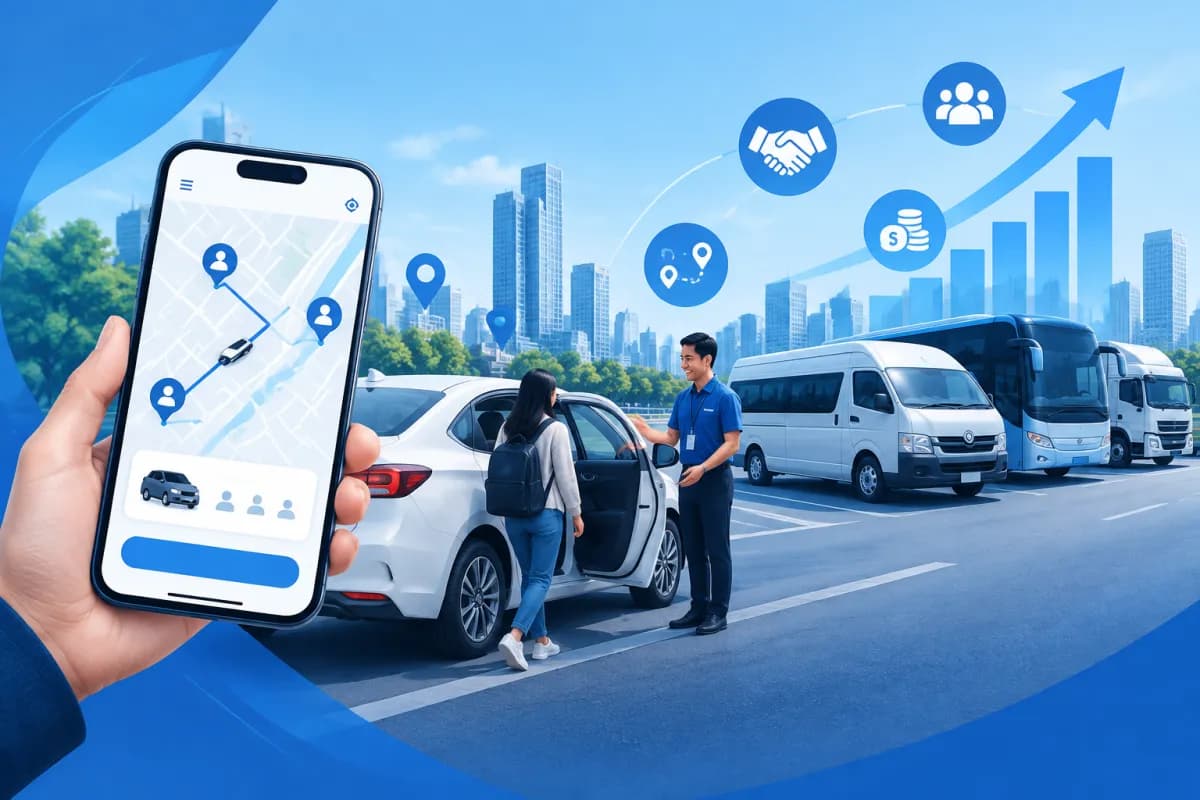
Growing demand for flexible, affordable travel is leading more passengers to choose shared rides instead of hiring an entire vehicle. For transport businesses, this is also an opportunity to make better use of their vehicles, reach more customers, and generate additional revenue. That is why “What is a ride-sharing app?” is a question increasingly asked by companies looking to bring technology into their operations.
A ride-sharing app is more than a booking tool. To operate effectively, the platform needs to connect passengers with drivers, match suitable trips, manage payments, and help the business monitor operations in real time. This article explores the potential of the model and the features to consider when developing a dedicated app.
What Is a Ride-Sharing App? How the Model Works
A ride-sharing app is a mobile app or online platform that allows multiple passengers traveling along similar routes to share a vehicle. Rather than each passenger hiring a separate car, the system matches suitable requests so they can share the journey and its cost.

For example, one passenger may need to travel from the city center to the airport, while another has a nearby pickup point and is heading in the same direction. The app can record the time, location, and number of seats requested, then suggest a suitable shared ride. Depending on the business model, vehicles may depart on a fixed schedule, on demand, or through a combination of both.
A typical process includes these steps:
- Passengers enter their pickup point, destination, travel time, and number of seats required.
- The system finds trips with a suitable route, schedule, and capacity.
- Passengers confirm their details, choose a payment method, and receive a booking code.
- The driver picks up passengers according to the schedule, while the business monitors trip status through its management system.
- After the journey, passengers can rate the service and receive a receipt or payment information.
The main difference between a shared ride and a private car service lies in how seats and costs are allocated. Ride-sharing aims to make better use of empty seats by serving multiple passengers traveling in similar directions. The model can be used for intercity routes, airport transfers, group commutes, or popular tourist routes.
Business Potential of the Ride-Sharing Model
Improve Vehicle Utilization
In transportation, vehicles that run with few passengers or travel back without passengers reduce operational efficiency. Ride-sharing helps businesses allocate seats more effectively, connect demand along similar routes, and reduce underutilized trips. With data-driven management, businesses can identify high-demand routes, time slots when vehicles are easiest to fill, and areas where more vehicles may be needed.
Reach Price-Sensitive Customers
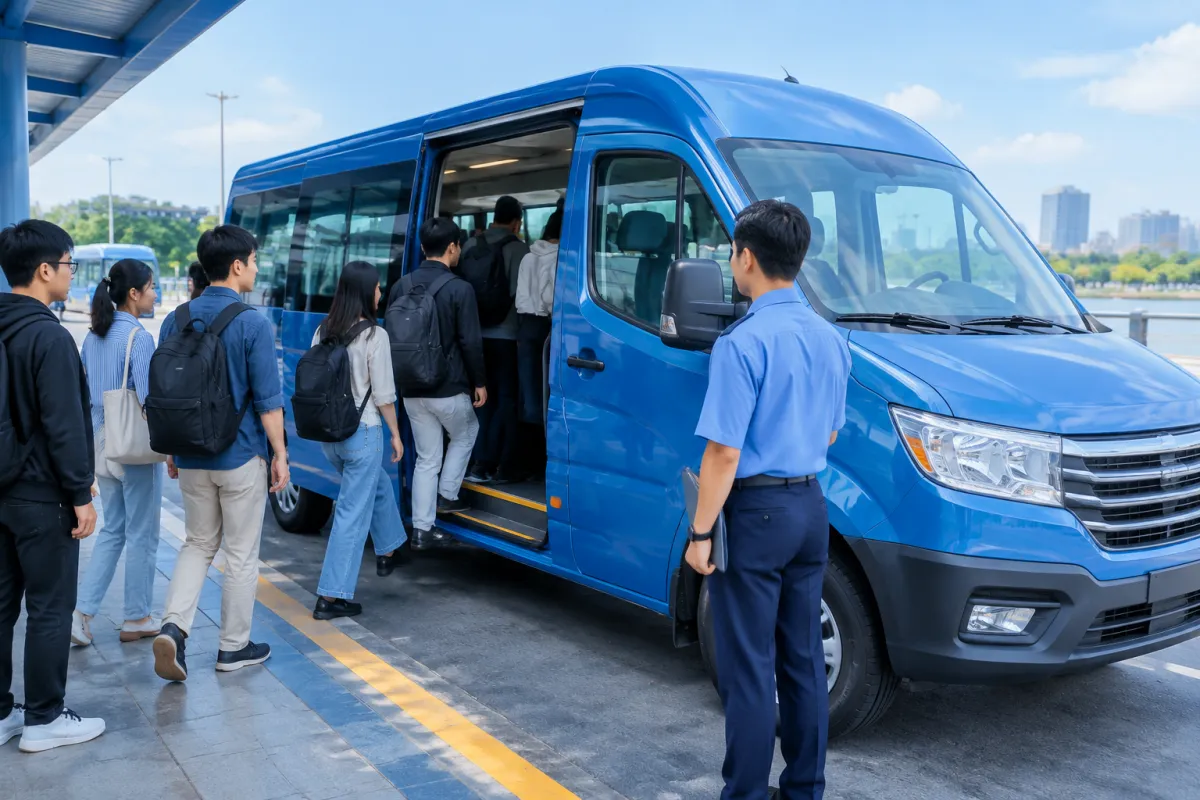
Not every passenger needs a private car or has the budget for a premium service. Shared rides offer a middle ground: they can be more convenient than public transport for some journeys while costing less than hiring an entire vehicle. This makes the model a strong option for students, commuters, tourists, and people who travel between cities regularly.
Create New Sales Channels and Revenue
A dedicated app enables businesses to accept bookings directly, promote new routes, and offer deals to specific customer groups. Depending on the strategy, revenue can come from fares, service fees, recurring transport contracts, or add-on services. Businesses also gain data on booking behavior, which can help them design more effective customer retention programs.
Strengthen the Customer Experience and Brand
Passengers can find trips, book seats, pay, and receive notifications on a single platform instead of calling or messaging across multiple channels. A consistent experience reduces confusion while giving businesses an opportunity to build their own brand and maintain customer relationships after each trip.
Features to Consider When Developing a Ride-Sharing App
An effective app needs to meet the needs of passengers, drivers, and operations teams. Businesses should prioritize features based on their real-world processes rather than trying to include too much in the first release.

For Passengers
- Trip search and booking: Let passengers enter their origin, destination, date and time, number of passengers, and luggage details if needed. Filters should help users compare routes, departure times, prices, and pickup points.
- Clear trip information: Show the vehicle type, available seats, pickup and drop-off points, estimated travel time, cancellation policy, and any applicable fees before passengers confirm.
- Convenient payments: Support payment methods suited to the target market and clearly communicate transaction status and refund policies.
- Notifications and trip tracking: Send booking confirmations, departure reminders, schedule changes, and driver information. Location tracking can help passengers plan while waiting for their ride.
- Ratings and support: Let passengers share feedback after a trip, view their booking history, and contact customer support if an issue arises.
For Drivers and Businesses
- Driver app: Display trip lists, pickup and drop-off details, passenger counts, and instructions for updating trip status.
- Route and seat management: Support the setup of schedules, capacity, stops, buffer times, and passenger-matching rules.
- Operations dashboard: Give staff one system to manage bookings, drivers, vehicles, revenue, support requests, and operational status.
- Reporting and analytics: Track occupancy rates, revenue by route, cancellation rates, punctuality, and customer ratings to support data-driven decisions.
- Role-based access and activity logs: Control access by role, record important changes, and support transparent incident handling.
Initially, businesses can focus on core features such as trip search, booking, schedule management, notifications, and an operations dashboard. Once they have real usage data, teams can expand the app with advanced features such as suggested pickup points, loyalty programs, or automatic fare adjustments.
Factors That Determine Operational Effectiveness
Matching Algorithms and Data Quality
Matching trips is not simply a matter of finding two nearby destinations. The system needs to account for route deviations, pickup times, waiting times, available seats, and limits on how much a journey can be extended. If too many passengers are matched but travel time increases significantly, the experience will suffer. Businesses should define clear priorities, such as balancing vehicle occupancy with reasonable journey times.
Address, pickup and drop-off location, schedule, and vehicle status data also need regular updates. Inaccurate information can cause delays, incorrect pickup locations, or additional dispatch costs. Standardizing data from the outset helps the app provide more reliable recommendations.
Safety, Privacy, and Reliability
Because the app handles personal information, travel itineraries, and payment data, it needs appropriate safeguards. Businesses should consider access controls, data encryption, backups, incident response procedures, and data retention policies. Depending on the scope of operations, users should be clearly informed about how their data is collected and used.
Reliability is also especially important during peak hours or when many people search for trips at the same time. The system needs to scale, synchronize booking status, and prevent double-booking of seats. Clear processes for cancellations, rescheduling, refunds, and complaints are also essential so staff can provide consistent support.
A Suitable App Development Roadmap for Businesses
Before investing, businesses should identify the business problem they need to solve. This could be low occupancy, a manual booking process, difficulty managing schedules, or a need to expand to new routes. The clearer the objective, the easier it is to select features and evaluate results after launch.
- Research the market and customers: Identify passenger segments, routes, time slots, competitors, and booking habits. Interviewing existing customers can help uncover real-world barriers.
- Design the operating model: Clarify pricing, passenger-matching criteria, cancellation policies, driver responsibilities, and customer support roles.
- Build a minimum viable product: Develop the most important workflows for passengers, drivers, and administrators. The first release should be reliable enough to test demand, but it does not need to include every idea.
- Run a limited pilot: Start with a few routes or customer groups to measure booking rates, occupancy, cancellations, and feedback on the experience.
- Improve and expand: Use operational data to refine the matching algorithm, add features, and expand routes once the processes have been validated.
Businesses should also budget not only for development but for operations, maintenance, user support, system updates, and marketing. An app that launches without people to manage data, handle requests, or maintain service quality will struggle to build lasting trust.
Conclusion
Understanding what a ride-sharing app is is the first step in assessing the model’s potential, but business results depend on operational planning, the quality of the customer experience, and the ability to use data effectively. The right app can improve vehicle utilization, reach more customers, and create a direct sales channel. By contrast, a product with weak processes or poor passenger matching can undermine customer trust.
Businesses should start with real customer needs, choose core features, and run a pilot at an appropriate scale before expanding. LilyTech offers technology consulting and development services tailored to business needs. Contact LilyTech to discuss a roadmap for building a ride-sharing app that fits your transport model, resources, and growth goals.

