
 Nguyễn Chính Ngọc Liên
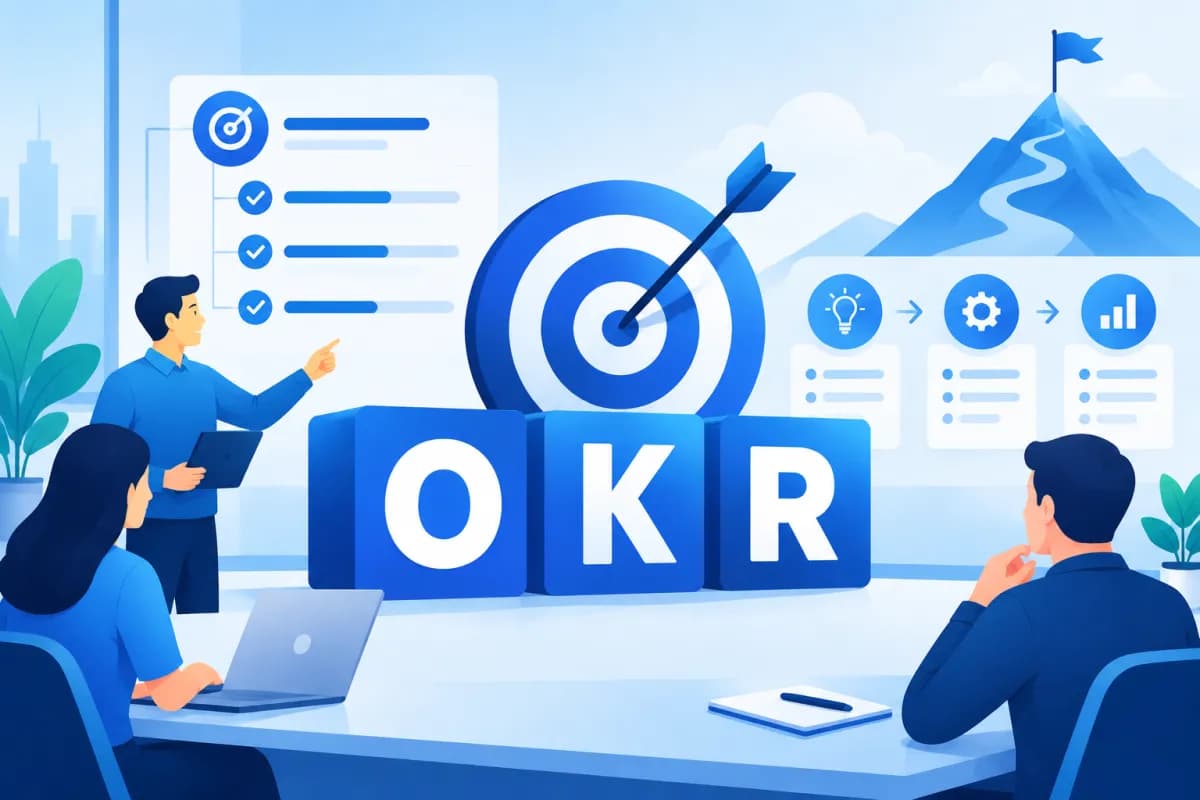
Businesses often set many goals but struggle to turn them into specific actions. Departments may be busy with day-to-day work without knowing which activities truly contribute to shared priorities. That is why more and more organizations are turning to OKRs as a way to manage goals and results. What are OKRs? They are a practical framework for connecting priorities with measurable outcomes.
Where should a business start when building clear, achievable OKRs? This article explains the core components of OKRs, how they differ from KPIs, and how to implement them—from choosing objectives to tracking progress. It also outlines how LilyTech can support businesses in strengthening their goal-setting and management processes.
What Are OKRs? The Core Components
OKR stands for Objectives and Key Results. It is a framework that helps organizations identify what matters most and measure progress through specific outcomes. OKRs are typically set for a defined cycle, such as a quarter or a year, and aligned from the company level down to teams and individuals.

A complete OKR has two components:
- Objective: Describes what a company, team, or individual wants to achieve. An objective should be concise, easy to understand, meaningful, and capable of guiding action. Objectives are usually qualitative; they do not need to include numbers.
- Key Results: Measurable outcomes used to determine how much progress has been made toward an objective. Each objective typically has two to five key results. Key results should describe a change or achievement, rather than simply list tasks to complete.
For example, an e-commerce business might set the objective, “Make the online shopping experience more convenient.” Its key results could be to reduce the cart abandonment rate from 70% to 55%, raise the post-purchase satisfaction score from 4.0 to 4.5 out of 5, and cut average order processing time from 24 hours to 12 hours. The objective sets the direction, while the key results show what needs to change to demonstrate progress.
What Benefits Do OKRs Bring to Businesses?
When designed and managed effectively, OKRs help businesses focus resources on a small number of important priorities instead of spreading them across too many initiatives. Employees understand which goals matter, how their work contributes to shared outcomes, and what to prioritize when resources are limited.
OKRs also increase transparency. When objectives are shared across an organization, teams can identify dependencies, duplication, or conflicts between plans earlier. Managers can also discuss progress using data rather than relying solely on impressions or activity reports.
Another benefit is that OKRs create a regular rhythm for learning and adjustment. At the end of each cycle, a business can review results, identify why it did or did not achieve them, and apply those lessons to the next cycle. OKRs are therefore more than a list of goals: they are a way to sustain dialogue and continuous improvement.
However, OKRs do not automatically solve every management problem. If priorities are unclear, data is unreliable, or leaders use results only to apply pressure, employees may chase numbers and hide difficulties. The effectiveness of OKRs depends on how they are designed, how involved the team is, and whether progress is reviewed throughout the cycle.
How Are OKRs Different from KPIs?
Both OKRs and KPIs support performance measurement, but they serve different purposes. A KPI is a metric used to monitor the health or performance of an activity, process, or department. For example, the on-time delivery rate may be an operational KPI. An OKR defines an objective aimed at creating change, along with key results that measure progress toward that change.
In other words, KPIs typically answer, “How is this activity performing?” while OKRs focus on, “What do we want to achieve in this cycle?” A KPI can be used as a key result if it measures an outcome that supports the objective, but not every KPI needs to become an OKR.
Businesses do not have to choose one or the other. KPIs can help maintain stable performance in ongoing operations, while OKRs focus attention on strategic priorities or significant improvements. Keeping the two concepts distinct prevents every operational metric from becoming a goal, which can make OKRs unwieldy and unfocused.
A Step-by-Step Guide to Building OKRs
Step 1: Identify Strategic Priorities
Before writing OKRs, leaders need to clarify where the business is headed, its biggest challenges, and which outcomes will matter in the next cycle. Useful inputs may include the annual strategy, customer needs, business data, internal capabilities, and market changes. Do not start by asking every department to write a long list of goals before agreeing on shared priorities.

Choose a small number of priorities with a meaningful impact. If everything is treated as a priority, teams will struggle to focus and resources will be spread too thin.
Step 2: Write Clear, Direction-Setting Objectives
A good objective answers the question: “What change do we want to achieve?” Use specific language that people across the organization can understand, and avoid vague statements such as “Improve operations” or “Achieve significant growth.” The objective should also matter enough for the team to commit to working together and dedicating resources.
For example, instead of writing “Improve customer service quality,” you could write, “Create a fast and reliable customer support experience.” An objective does not need to include every solution in its wording, because the approach may change during implementation.
Step 3: Define Measurable Key Results
For each objective, define two to five key results. Each key result should have a metric, a baseline where available, and a target to reach within a specific timeframe. Prioritize outputs or customer impact rather than simply counting completed activities.
For example, “Run 10 sales training sessions” is a task, but it does not prove that sales capability has improved. A better key result might be “Increase the conversion rate from sales consultation to signed contract from 18% to 25%.” The training sessions would then be initiatives supporting that outcome.
To check the quality of a key result, ask: If we reach this number, will we have reasonable evidence that the objective has progressed? What data will confirm the result? Who is responsible for updating it, and where is the data stored? If these questions do not have clear answers, adjust the measurement or define the metric more precisely.
Step 4: Align OKRs Across Levels and Choose Initiatives
Company-level OKRs provide direction for team OKRs, but they should not be imposed mechanically. Teams need to understand the shared objectives and then identify contributions that fit their expertise and actual work. Some OKRs may align directly through the hierarchy; others require cross-functional collaboration, such as marketing, sales, and product teams working together to improve the customer experience.
Once objectives and key results are agreed on, identify the initiatives or activities expected to help achieve them. Make a clear distinction between the destination and the approach: a key result describes the outcome to achieve, while an initiative is an action plan. Revisit the approach if the data shows it is not driving progress.
Step 5: Assign Ownership and Agree on Measurement
Each OKR should have an owner to coordinate progress, but that does not mean one person must deliver the entire result alone. For cross-functional objectives, define each team’s role, who will update the data, and who will help resolve blockers. Agree on metric definitions from the outset so that teams do not report the same result in different ways.
Before the cycle begins, check whether the objectives are feasible, and confirm the resources, timelines, and dependencies. Goals that are too easy will not encourage improvement, while goals that are too far out of reach can undermine the team’s confidence. Use data and context to set an appropriate level of ambition.
How to Track Progress and Evaluate OKRs Effectively
OKRs should be tracked throughout the cycle, not just reviewed at the final meeting. Depending on the size and nature of the business, teams can hold weekly or biweekly check-ins. Each review should focus on progress, new data, risks, obstacles, and next steps; avoid turning the meeting into a lengthy readout of reports.

A scoring scale or completion percentage can support evaluation, but teams should agree on how scores are calculated and how they will be used. Scores should not replace discussion about the reasons behind the results. An unmet key result may reflect an incorrect initial assumption, changing data, insufficient resources, or an ineffective initiative. Each cause should lead to a specific lesson or decision.
At the end of the cycle, businesses should review the following questions:
- Which results did we achieve, and what data confirms them?
- What helped progress, and what got in the way?
- Which assumptions, initiatives, or ways of working need to change?
- What should we continue, stop, or test in the next cycle?
OKRs should not be the sole tool for determining compensation or ranking individual employees. If employees are motivated to choose only easy goals or adjust figures to protect their performance record, the system loses its ability to encourage transparency and experimentation. Separate discussions about OKR results from personnel decisions, while still taking context and actual contributions into account.
Conclusion: Start OKRs with Clear Priorities
Understanding what OKRs are is the first step in turning a business’s strategic direction into trackable results. An effective process starts by choosing priorities, writing clear objectives, defining measurable key results, assigning responsibilities, and maintaining a regular review cadence. Businesses should keep implementation practical, learn from real-world data, and improve from cycle to cycle instead of trying to build a complex system right away.
If your business needs to standardize its goals and management processes or put technology systems in place to support performance tracking, LilyTech can provide advice tailored to your needs. Contact LilyTech to discuss an implementation approach that fits your business’s size and growth objectives.

