
 Đoàn Lê Minh Anh
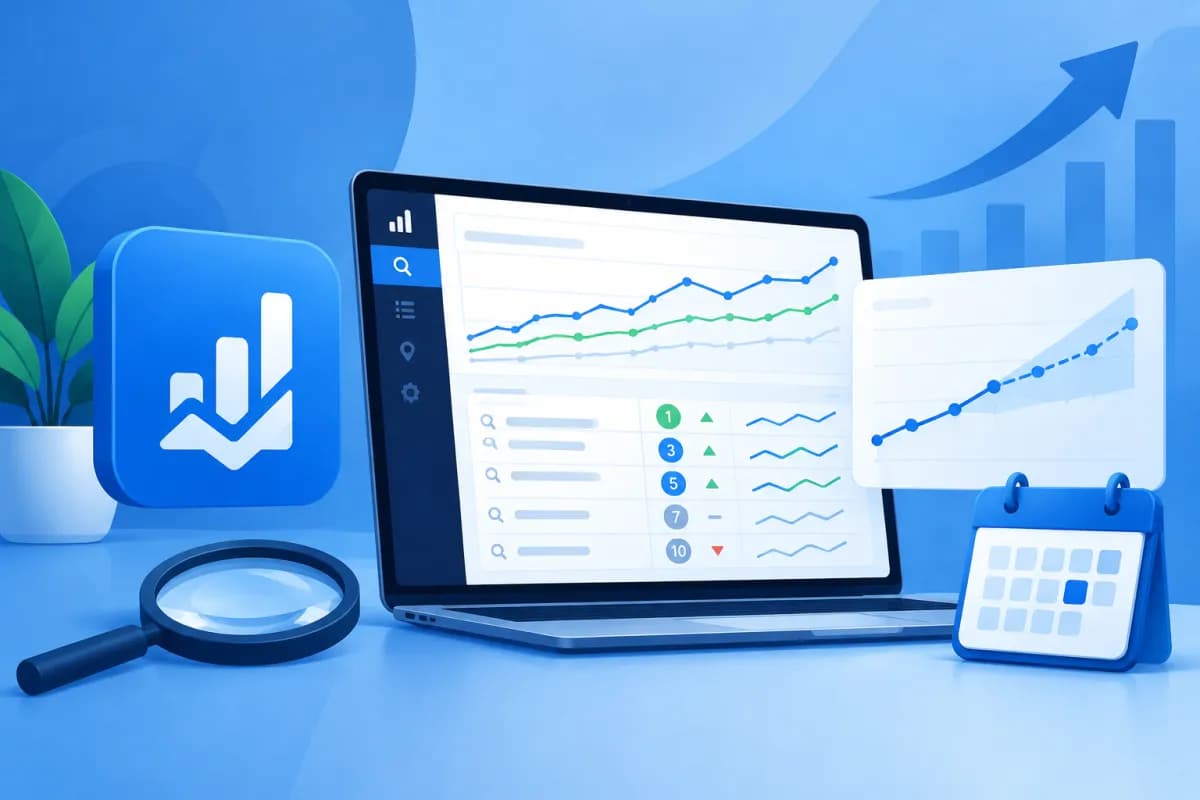
Measuring SEO performance involves more than checking where a few keywords rank. Businesses also need to understand how rankings change, how much organic traffic could grow, and how results contribute to business goals. SEOmonitor is a platform that helps SEO teams track rankings, forecast traffic, and report on campaign performance in one system.
This article helps business owners and marketers understand SEOmonitor’s main features, how to apply data to planning, and what to consider before choosing the platform. The tool can make SEO management more transparent, but results still depend on data quality, content strategy, and the team’s ability to execute.
What is SEOmonitor, and who is it for?
SEOmonitor is a tool for managing SEO campaigns, with key features including rank tracking, forecasting, and reporting. Rather than checking keyword rankings at a single point in time, users can monitor changes over time, combine them with search data to assess growth opportunities, and share progress with stakeholders.

The platform is often a good fit for SEO agencies, in-house marketing teams, and businesses managing multiple keyword groups or projects. For agencies, tracking and reporting features can help standardize client updates. For in-house teams, centralized data supports collaboration among SEO, content, and business management teams.
However, the tool does not replace SEO expertise. SEOmonitor will not decide which keywords to prioritize, what content to improve, or which pages have technical issues. Users still need to set appropriate goals, validate the data, and turn insights into specific tasks. The platform’s value lies in giving measurement and planning processes a stronger evidence base.
Rank tracking: accurate monitoring with context
Rank tracking means monitoring keyword positions in search results over time. This data helps SEO teams spot upward, downward, or flat trends and assess the impact of website changes. With SEOmonitor, businesses can organize keywords by campaign and monitor performance instead of relying on scattered manual checks.

For rank tracking to be useful, start by building a keyword list that reflects what your customers are searching for. Group keywords by topic, service, stage in the buying journey, or priority. If you select only high-volume keywords without considering relevance and conversion potential, the ranking report may look impressive without reflecting business performance.
Data accuracy also depends on how the campaign is configured. Specify the market, language, device, and search engine you want to track. Search results can vary by location and device, so make sure the settings match your target audience. It is also best to look at trends over a sufficiently long period rather than draw conclusions from a single change.
Rankings should also be interpreted in context. A keyword moving up a few positions may not bring significant traffic if search demand is low or the landing page does not meet user intent. Conversely, a group of commercial keywords can deliver substantial value even with modest search volume. SEO teams should combine rankings with traffic, visibility, landing-page quality, and conversions for a more complete assessment.
Traffic forecasting: plan your SEO efforts
Traffic forecasting is the process of estimating potential organic traffic growth based on keyword and ranking data, along with assumptions about performance. In SEOmonitor, forecasts can help teams visualize a campaign’s potential, compare scenarios, and discuss goals more realistically with leadership or clients.

A useful forecast is not a promise that traffic will reach a specific figure. It is a reference model that depends on many variables: search volume, current rankings, the potential to improve rankings, click-through rates, competition, and changes to search results. Market conditions, seasonality, competitors, and algorithm updates can also lead to outcomes that differ from projections.
To use forecasts responsibly, state your assumptions clearly and explain them in plain language. For example, the team could present conservative, baseline, and high-growth scenarios instead of a single figure. Each scenario should be tied to implementation requirements, such as content output, technical improvements, landing-page optimization, or link-building resources.
Forecasting also helps teams prioritize resources. If a topic group has strong traffic potential but the website lacks a relevant page, the business could consider investing in content. If a keyword already ranks well but has a low click-through rate, optimizing the title and description may be a higher priority than expanding into new topics. Forecasts are most useful as a tool for discussion and decision-making, not as standalone results.
Reporting: turn data into actionable insights
SEO reports often fall short when they list too many metrics without answering the key questions: How is the campaign progressing? What is affecting performance? What should happen next? SEOmonitor helps teams consolidate campaign data so they can track and present performance more systematically. A good report should help readers understand the situation without having to piece together multiple data tables.

A report for business leaders should focus on goals, trends, and business impact. It could cover priority keyword groups, notable ranking changes, organic traffic, and opportunities that may warrant investment. Reports for SEO teams can go deeper into individual pages, topics, technical issues, and tasks to resolve. Adjust the level of detail to suit the audience.
Set a consistent reporting schedule, such as monthly or quarterly, and document important changes during each period. When rankings drop, investigate whether competition, content, technical issues, or shifts in search behavior may be responsible. When metrics improve, identify which activities contributed so the team can build on them. Explaining the causes makes reporting a management tool rather than a simple summary.
For businesses that need to connect SEO data with broader marketing goals, LilyTech can help assess measurement needs, establish reporting workflows, and align SEO with website, content, and other digital marketing activities. It is important to agree on metric definitions so everyone interprets the same results in the same way.
How to implement SEOmonitor effectively
Before adding data to the tool, define your campaign goals. These might include increasing visibility for a service category, growing traffic from expert content, or improving the performance of pages with strong potential. Clear goals make keyword selection and report structure more focused.

- Standardize your keyword set: Remove irrelevant keywords, group the rest by topic, and prioritize them based on business value.
- Configure the right market settings: Check the location, language, device, and website scope before tracking.
- Record your baseline: Save initial data, key landing pages, and current SEO activities as a basis for comparison.
- Review forecasts alongside their assumptions: Discuss conditions and risks openly, and avoid treating estimates as guaranteed outcomes.
- Turn insights into tasks: Assign specific work to content, technical, or conversion optimization teams, then review the results regularly.
Before choosing a tool, businesses should also consider cost, the number of projects, keyword set size, and how well it fits existing workflows. Test it on a representative campaign, check whether the data answers management questions, and assess how easy it is for the team to use. The right tool is one that people use consistently and that supports action—not simply one with many features.
Conclusion
SEOmonitor combines rank tracking, traffic forecasting, and reporting to help businesses manage SEO campaigns with clearer data. When configured correctly, it can help identify trends, assess potential, and communicate progress. However, data creates value only when interpreted in a business context and translated into a specific optimization plan.
If your business needs to establish an SEO measurement process, connect data with marketing goals, or choose a solution that fits your available resources, contact LilyTech for advice. The LilyTech team can help assess your needs, define an implementation approach, and develop a plan to improve website performance.

