
 Đoàn Lê Minh Anh
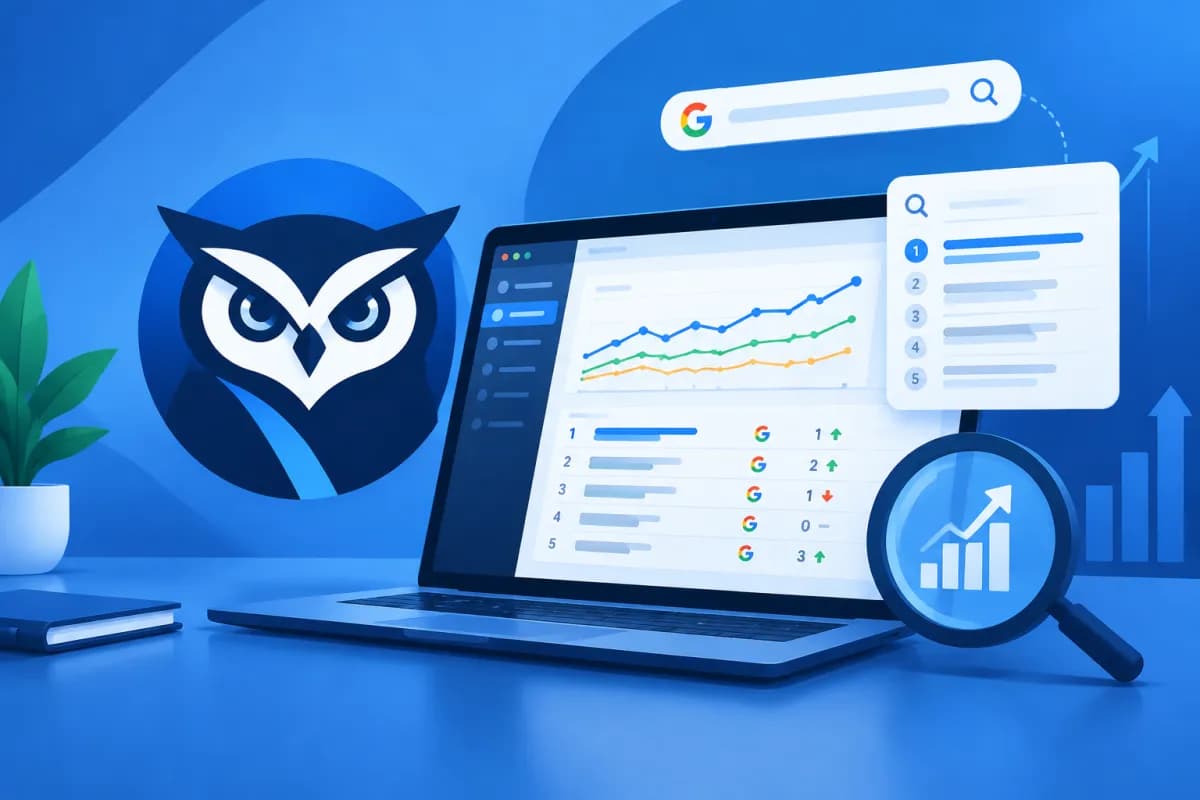
Google keyword rankings can vary by location, device, and search time. Checking rankings manually on a single computer or from one place, therefore, may not accurately reflect SEO performance. Nightwatch is a keyword rank tracking tool that helps businesses monitor search fluctuations under specific conditions and use the data to make informed decisions.
In this guide, we’ll explore how to approach rank tracking with Nightwatch, focusing on three important factors: location, device, and reporting. With the right tracking goals in place, businesses can identify which keywords are gaining traction, compare results across locations and devices, and learn how to present data to teams and clients. Nightwatch can make this process more structured and actionable.
Nightwatch and the role of rank tracking in SEO
Rank tracking is the process of monitoring a website’s position in search results for selected keywords. Rankings are a useful metric, but they should not be treated as the only goal. A high position is more meaningful when it also brings relevant traffic, attracts potential customers, and contributes to real business results.

Nightwatch provides a way to organize keyword tracking by project, allowing SEO teams to monitor changes over time rather than rely on a handful of isolated searches. The tracking data can help answer questions such as which keyword groups are improving, which pages are losing positions, and how a website’s visibility has changed after a round of content optimization.
It’s important to distinguish rank tracking data from traffic and conversion data. Rank tracking shows a website’s position under a specific search configuration; other analytics tools help assess whether visitors arrived and what actions they took. Combining data sources helps businesses avoid assuming that higher rankings automatically mean higher revenue.
- Track trends: See how rankings change day by day or over a selected period.
- Prioritize optimization: Identify keywords with growth potential or notable declines.
- Evaluate SEO work: Compare ranking changes with content updates, technical improvements, or campaigns.
- Communicate results: Present progress in an accessible format for executives, clients, and other stakeholders.
The key is to build a keyword set with a clear purpose. It should include branded terms, service or product keywords, queries with purchase intent, and phrases that support the research journey. Tracking too many irrelevant keywords can make reports cumbersome without helping anyone make better decisions.
Set up rank tracking by location
Location is especially important for businesses with customers in multiple provinces or cities, or those that provide services in specific areas. Search results for someone in Hanoi may differ from those shown to someone in Ho Chi Minh City, even when they use the same query. For local services, this difference directly affects a business’s ability to reach customers.

When configuring a project, choose locations that match the scope of the business you want to evaluate. If your business serves only one city, starting with that city will be more useful than tracking the whole country. If you operate in multiple areas, create corresponding location groups for comparison rather than rolling everything into a single average metric.
Choose the right geographic scope
The level of location detail should match how customers search for your services. A local store may need to track rankings at the city level or in smaller areas if the tool and settings support it. Nationwide e-commerce businesses often focus on a broader area, but should still check key markets separately.
Avoid creating too many locations at the outset. Identify areas with clear revenue, customer volume, or expansion plans, then add locations when there is a business question to answer. This approach keeps the data easy to read and reduces the risk of misinterpretation from comparing dissimilar markets.
Interpret differences between areas
If a keyword ranks well in one area but poorly in another, that may be a reason to review the relevance of local content, business information, landing pages, and the level of competition. However, a difference in rankings does not automatically mean there is a website problem. Search demand, competitors, and product fit can also vary from one location to another.
For local SEO, consider rankings alongside on-page information, business listings, customer reviews, and contact performance. These signals help show whether the website serves users in that area effectively. Location reports are most valuable when they inform a specific decision, such as adding content for a market or improving a local service page.
Track by device to understand the search experience
People may search on computers, phones, or other devices, and the results they see are not necessarily identical. Device-based tracking helps businesses identify differences between the desktop and mobile experience. This is useful when most customers visit from phones or when a website has issues with speed, layout, or usability on smaller screens.

In Nightwatch, configure devices to match your analysis goals and keep the settings consistent across reporting periods. If you track mobile this month but switch to desktop next month, comparisons may be misleading. When you need to evaluate both, treat them as separate segments rather than combining them into a single conclusion.
Read mobile and desktop data in context
Lower mobile rankings are not necessarily caused by the interface design alone. You may need to review load speed, content readability, the usability of calls to action, and how well the page matches the query. Conversely, a strong mobile ranking does not guarantee conversions if users have trouble finding information or completing an action.
Compare device-level data with actual behavior on the website. If mobile drives many visits but few consultation requests, the team could review forms, call buttons, above-the-fold content, and the checkout experience. If desktop rankings are strong but traffic is low, revisit search demand and the appeal of the title and search-result description.
B2B businesses should not assume that customers search only on computers. Decision-makers may start their research on a phone and return to the website later on a desktop. Device-based tracking can help form a hypothesis about that journey, but analytics data and sales feedback are needed to confirm it.
Reporting in Nightwatch: Turn data into decisions
Reporting is more than exporting a ranking table. An effective report should explain where the business stands, what has changed, what might be worth investigating, and what to do next. Nightwatch can help teams organize tracking data and communicate progress clearly; the metrics selected and the way they are interpreted should still reflect project goals.

Identify the audience before preparing a report. Executives typically need an overview and the impact on business objectives. SEO specialists need detail by keyword, landing page, location, and device to find optimization opportunities. Clients need a clear presentation that avoids unnecessary technical jargon and spells out the next steps.
- Summarize trends: Highlight keyword groups that rose, fell, or remained stable during the reporting period.
- Segment clearly: Separate data by location, device, brand, and service group where relevant.
- Connect results to activity: Note changes made, such as content updates or landing page improvements.
- Recommend actions: Select a few priorities that match the potential impact and available resources instead of listing too many tasks.
Maintain a consistent reporting schedule to support monthly or quarterly comparisons. When there is a major change, check the keyword set, location, device, and reporting period before drawing conclusions. A change in tracking configuration can make the data incomparable with the previous period. Also, avoid reporting only on keywords with positive results; a balanced view helps teams spot risks earlier.
To make reports genuinely useful for decision-making, combine rankings with traffic, conversion, and business activity data. For example, a keyword that gains positions but brings in no additional customers may need to be reassessed for search intent or landing page content. Conversely, a low-volume keyword that attracts high-quality customers may still be worth prioritizing.
LilyTech can help businesses build SEO and reporting processes aligned with their marketing goals, from defining a keyword set to analyzing website performance. Whether you use Nightwatch or another tool, the essentials are consistent data collection, a clear connection to business questions, and an actionable plan.
Conclusion
Nightwatch helps businesses take a more systematic approach to rank tracking by monitoring keywords by location and device and organizing reports. Setting the right geographic scope, distinguishing mobile and desktop data, and interpreting changes in context can help teams better understand search performance. Treat rankings as one part of the SEO picture, alongside traffic, conversions, and customer quality.

If your business needs to establish an SEO tracking process, choose metrics, or connect data to marketing objectives, contact LilyTech for guidance on a solution that fits. Our team can help define priorities, create clear reports, and plan improvements to website performance over time.

