
 Quinn Pham
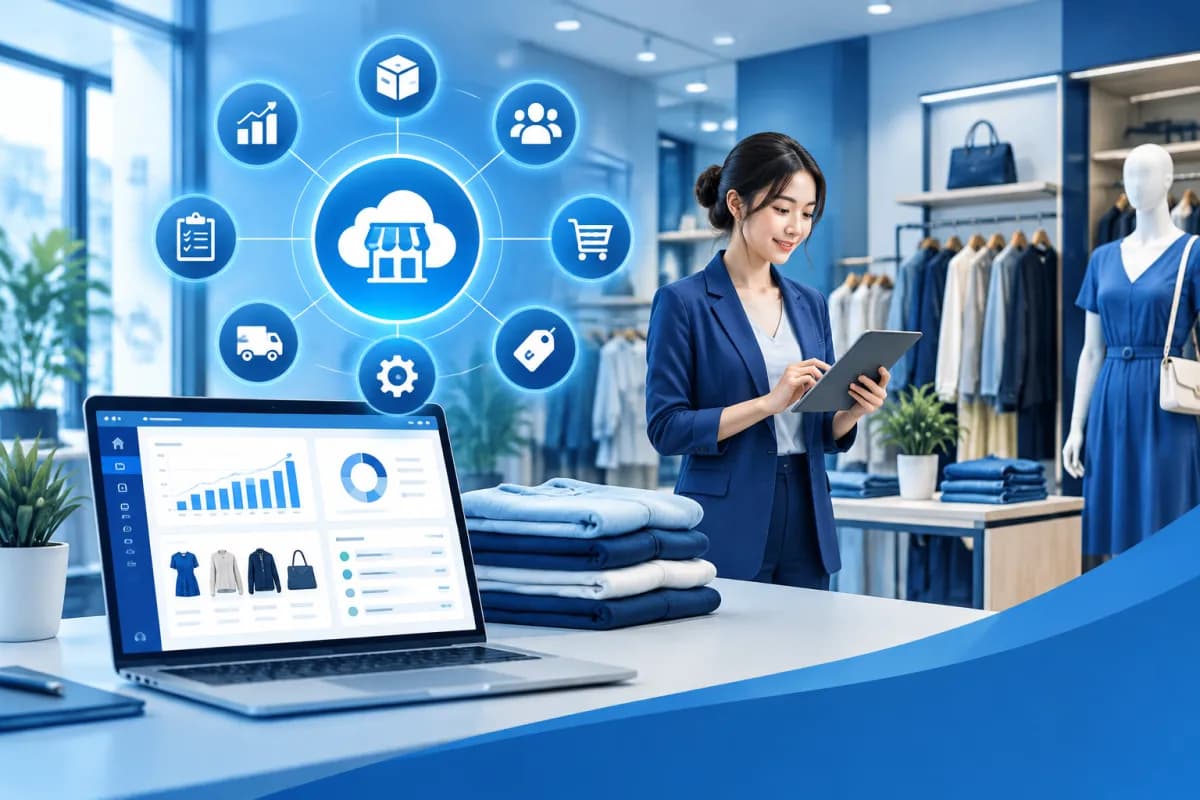
ERP for fashion retail stores: 9 Benefits for Managing Inventory, Orders, and Revenue is a topic worth exploring for businesses looking to run their stores more accurately and efficiently. As the number of styles, sizes, colors, and sales channels grows, manual management can lead to inaccurate data, inventory losses, and missed sales opportunities.
A suitable ERP system connects activities such as purchasing, sales, inventory management, finance, and customer service on a single platform. This article explores nine practical benefits of ERP and offers guidance on how fashion businesses can choose and implement the right solution. ERP for fashion retail stores can provide a unified view of operations as a business grows.
What is ERP for a fashion store?
ERP (Enterprise Resource Planning) is a system that helps businesses centralize data and coordinate processes across departments. For a fashion store, the software needs to manage products by multiple attributes, such as SKU, collection, color, size, season, and supplier. A single style may have many variants; if staff track only the total quantity, it can be difficult to know exactly which sizes are available at each branch.

When configured correctly, ERP coordinates operations from product purchasing through sales, returns, and revenue recording. Store owners can monitor performance using up-to-date data instead of piecing together reports from notebooks, spreadsheets, and disconnected software. ERP will not solve every problem automatically, but it provides a unified foundation for managing processes and making decisions based on reliable information.
9 benefits of ERP for fashion retail stores
1. Track inventory by product variant
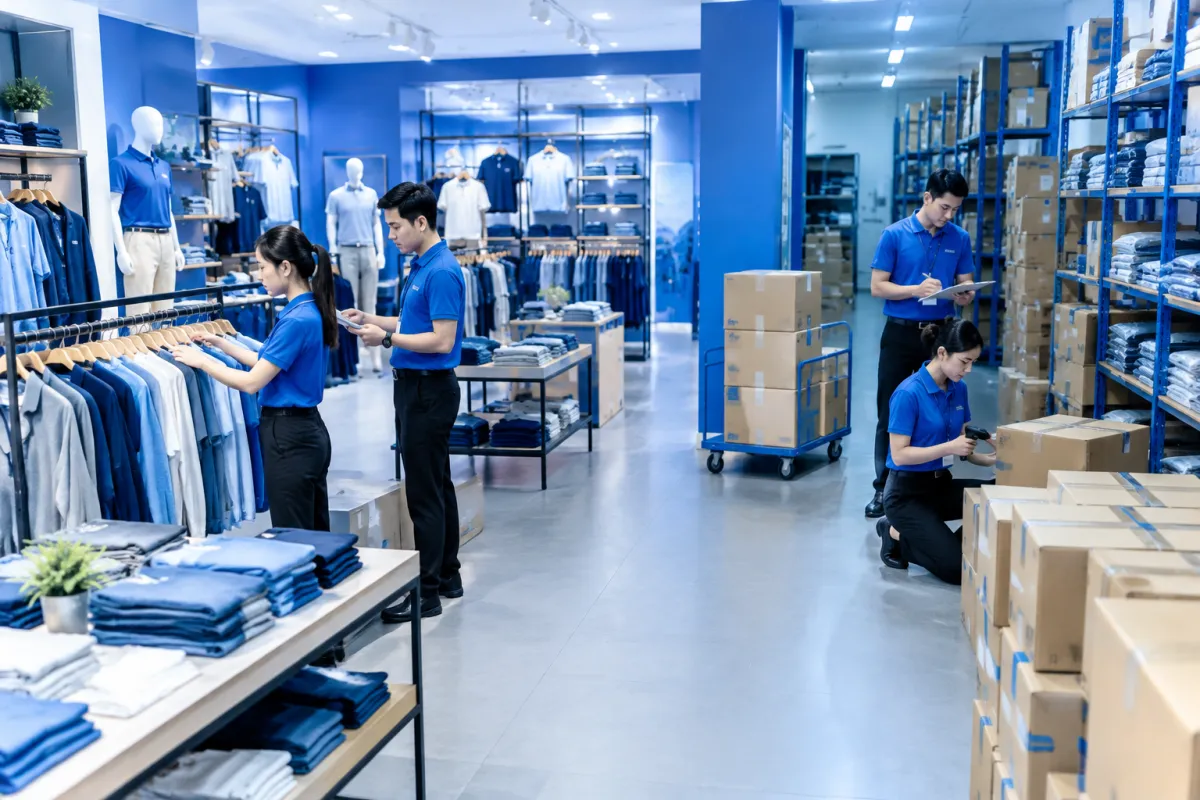
ERP records quantities by product SKU, color, size, warehouse, and store. Staff can quickly check which branch has an item in stock, reducing the risk of showing an item as available when it has already sold out. Purchase, sales, stock transfer, and adjustment histories are also recorded, making it easier to trace discrepancies and identify their causes.
2. Reduce excess inventory and stockouts
Sales and inventory data help businesses identify bestsellers, slow-moving products, and when to replenish stock. Buyers can then make informed purchasing decisions instead of relying on guesswork. This is especially useful for seasonal products, as slow-moving stock can quickly lose value when the season ends.
3. Synchronize orders across multiple channels
If a business sells in-store, on its website, and through e-commerce marketplaces, orders from all channels can be consolidated in one system. Inventory is updated after each transaction, reducing the risk of selling more than is actually available. Staff can also track order processing, shipping, cancellations, and returns through a single workflow.
4. Serve customers faster at checkout
Connecting ERP with the point-of-sale system helps staff quickly look up products, prices, promotions, and stock availability. Transactions are recorded at checkout rather than being re-entered at the end of the day. Returns and exchanges are also more transparent because staff can access invoice details and transaction histories.
5. Track revenue and profit more accurately
ERP consolidates revenue by store, sales channel, product, and time period. Combined with cost, discount, and related expense data, this gives managers a more realistic picture of business performance. Clear reports can reveal products with high sales but low margins, or promotions that have not delivered the expected results.
6. Manage promotions consistently
Businesses can set up discount rules, promotional codes, or campaigns for specific product groups and time periods. Centralized management reduces pricing errors by staff and makes it easier for store owners to review sales during and after a promotion. Consistent data recording also makes it easier to evaluate promotional performance.
7. Improve purchasing and supplier management
The system stores supplier details, order histories, delivery times, and purchase costs. Businesses can track incoming orders, compare quantities received with those ordered, and assess each supplier’s performance. A well-documented purchasing process helps prevent duplicate orders, missing paperwork, and receiving errors.
8. Standardize processes across multiple branches
As a retail chain grows, ERP helps standardize pricing, receiving and issuing stock, transfers, sales, and reporting. Business owners can review each location’s performance without waiting for manual report consolidation. Appropriate access controls also ensure that staff can access and perform only the tasks within their responsibilities.
9. Improve forecasting and business decisions
Centralized data on sales, inventory, seasonality, and shopping behavior helps managers identify trends more clearly. Businesses can use reports to plan purchasing, allocate products across branches, or adjust their product range. This provides a foundation for moving from reactive problem-solving to proactive planning, although forecast quality still depends on accurate input data.
When is ERP for fashion retail stores a good fit?
ERP for fashion retail stores is particularly useful when a business manages many SKUs and product variants, operates across two or more sales channels, is expanding its branches, or frequently encounters inventory discrepancies. Repeated data entry across multiple tools, time-consuming report consolidation, or difficulty determining actual profit are also signs that it may be time to consider a centralized management system.
By contrast, a very small business with simple processes may not need a full ERP implementation right away. Before choosing a solution, identify the most pressing problems, budget, integration requirements, and team readiness. Software with many features that does not fit existing workflows can increase costs and make it harder for staff to use.
How to choose and implement ERP effectively
Before signing a contract, businesses should list the processes they want to improve and ask vendors to demonstrate the software using real store scenarios. In particular, check that it can manage product variants, stock transfers, returns, pricing, promotions, and integration with the channels already in use. Clarify implementation, maintenance, training, and technical support costs, as well as how process changes will be handled.

A phased implementation can help reduce risk. Businesses can start with product data and inventory, then connect sales, finance, and online channels. Before going live, review product SKUs, opening stock quantities, user permissions, and staff training. Assigning clear responsibility for data is just as important as choosing the software.
LilyTech provides ERP consulting and implementation tailored to each business’s goals, processes, and actual scale. Our team can support you from needs analysis and solution selection through implementation planning and integration with related systems, helping you avoid unnecessary, scattered investments.
Conclusion
ERP helps fashion stores track inventory by variant, synchronize orders, monitor revenue, and standardize operations across teams and branches. The value it delivers depends on choosing the right solution, standardizing data, and ensuring consistent staff adoption. Businesses should start by addressing clear operational bottlenecks, then expand as their needs grow.
If your business is considering ERP or wants to improve its retail management processes, contact LilyTech for advice on a solution and implementation plan suited to your fashion store.

