
 Nguyễn Chính Ngọc Liên
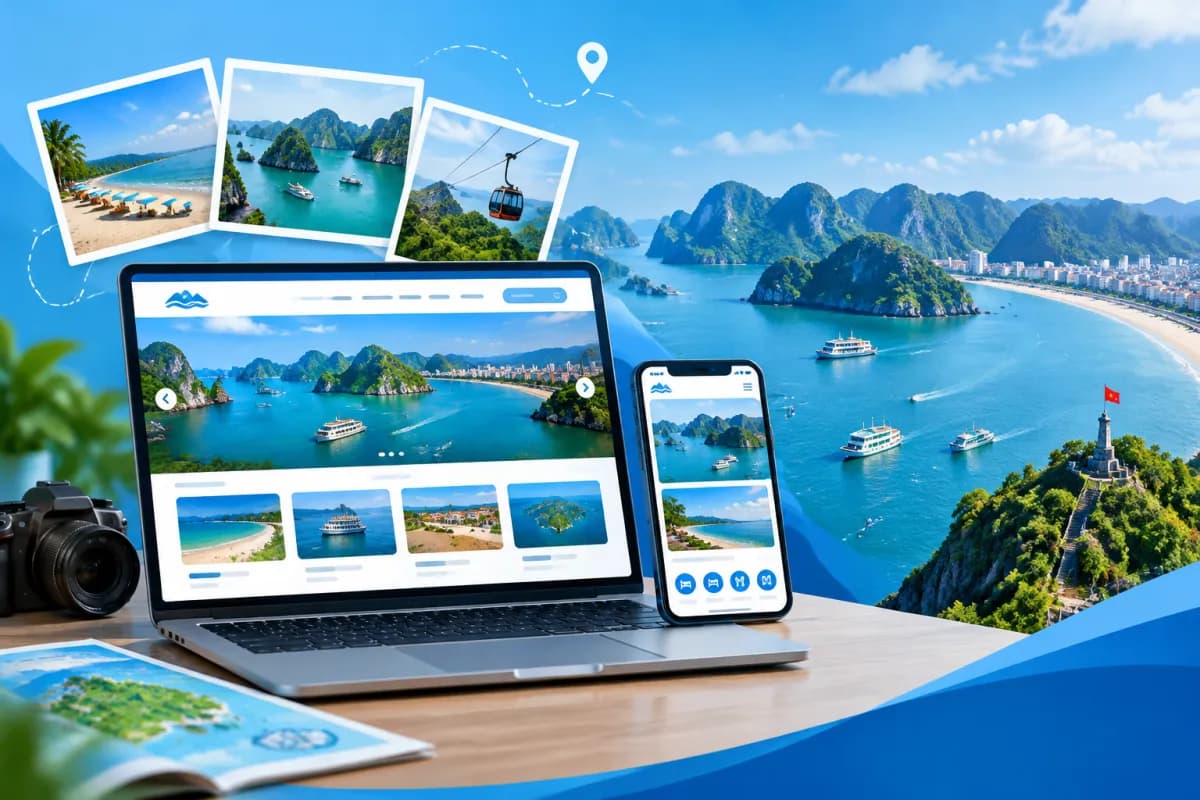
Travelers often need to research several details before choosing a tour or place to stay: what the itinerary includes, which services are covered by the price, where to meet, and how to get in touch. A well-organized website helps businesses present this information clearly and provide a channel for receiving service inquiries online. That is why Do Son Cat Ba travel website design should start with the real user journey, rather than focusing only on an eye-catching appearance.
For businesses offering tours, accommodation, or travel content about the Do Son and Cat Ba areas, a website should help visitors distinguish between options, check details, and submit inquiries on their own. This article covers the key components to include, how to organize tours and accommodation inquiries, the role of maps, and the steps involved in building a website that can support business operations over the long term.
What needs should a travel website address?
A travel website is an online touchpoint between a business and someone considering a trip. Visitors may access it on their phones while searching for information, comparing options, or looking for a quick answer about an itinerary. If the content is unclear, hard to find, or difficult to view on a small screen, they may leave before submitting an inquiry.

Before designing the website, businesses should identify their main customer groups and the decisions those customers need to make. For example, people looking for tours often want to know the duration, activities, included services, and applicable terms. Those searching for a place to stay want to see room types, amenities, photos, and how to ask about availability. Visitors researching destinations need useful information, travel guidance, and map locations.
- Tour customers: need to see the itinerary, pickup point, included services, and how to request advice.
- Accommodation seekers: want to view room types, amenities, real-world photos, and contact details for booking inquiries.
- Independent travelers: need destination information, activity suggestions, and maps to help them find their way.
- Businesses: need to manage content, capture leads, and update information without relying entirely on social media channels.
Based on these needs, the website structure can be organized into clear sections such as Tours, Accommodation, Destinations, Travel Tips, and Contact. This makes it easier for visitors to find their way around and gives businesses a foundation for expanding their content as they add products or services.
Do Son Cat Ba travel website design for tours and accommodation inquiries
Tour and accommodation pages are often closely tied to conversion, so their information should be specific and easy to compare. Rather than making visitors send a message just to find out what a tour includes, product pages should present essential details directly on the website. Effective Do Son Cat Ba travel website design helps visitors understand their options before contacting the business, without publishing prices, availability, or service terms that the business has not confirmed.

What should a tour page include?
Each tour should have its own page with an easy-to-understand name, a brief introduction, and an itinerary organized by leg or day. Businesses can specify the duration, meeting point, planned transport, included and excluded services, and any important notes. If details depend on the date or require confirmation, explain how to get in touch to check rather than letting visitors assume they are fixed commitments.
Place a clear call to action somewhere easy to see, such as “Request a consultation” or “Ask about departure dates.” Forms should ask only for essential information, such as name, phone number, preferred date, and group size. A short form reduces effort, while a confirmation message after submission should let visitors know that the business has received their inquiry and will follow up according to its process.
Accommodation pages and room inquiry process
For accommodation services, organize content by room type or amenity group so visitors can compare options easily. Each option can include an approximate capacity, amenities, photos, and important notes. If the website cannot check real-time availability, use an accommodation inquiry form or contact button and make it clear that visitors need to wait for confirmation from the provider.
For example, someone considering a trip could select their preferred dates, room type, and number of guests in a form. Staff receive enough information to respond, while the visitor does not have to explain everything again across multiple channels. For businesses with a more complex booking management process, clarify integration requirements for existing software before developing synchronization features.
Destination pages, maps, and the mobile experience
Destination content makes a website more than a place to showcase products: it can also be a useful source of information while visitors plan their trip. Businesses can create a separate page for each destination or topic, covering sightseeing activities, trip preparation tips, and things to check before departure. Review information regularly, include an update date when appropriate, and avoid making unverified claims about details that may change.

Maps can help visitors understand the location of meeting points, accommodation, or places mentioned in an itinerary. Depending on the website's goals, it can display an embedded map, a written address, and a button to open a map app on the visitor's device. Don't rely on maps alone: an address, directions to recognizable landmarks, or backup contact details are also helpful if the map content does not load.
Many searches and inquiries happen on phones, so the interface should work well across different screen sizes. Check whether text is easy to read, call and inquiry buttons are easy to tap, forms are not too long, and images do not slow page loading. Important content such as itineraries, amenities, and contact options should appear in an easy-to-scan order, without requiring visitors to zoom in or scroll past too many decorative elements.
For SEO, each page should focus on a clear topic, use a title that accurately describes its content, and provide a helpful introduction. You can naturally incorporate related phrases such as Do Son tours, Cat Ba tours, travel accommodation bookings, Hai Phong destinations, and travel maps. Use these keywords only when the page genuinely meets the corresponding needs; mechanically repeating phrases is no substitute for useful information.
Steps for building an effective travel website
To avoid an unfocused build, businesses can work through a series of steps, from defining objectives to testing the website after launch. This approach helps prioritize essential features and provides a basis for adding functionality based on feedback and usage data.

- Define objectives and customer groups: Decide whether the website should prioritize selling tours, promoting accommodation, sharing destination information, or combining these goals.
- Inventory products and content: Gather itineraries, approved images, amenity details, addresses, and procedures for handling inquiries.
- Plan the site structure: Organize the main sections and links between tours, accommodation, destinations, and contact information so visitors can find their way around.
- Design and develop: Create an interface that fits the brand, optimize it for mobile, and implement forms, maps, or necessary integrations.
- Test before launch: Check internal links, forms, display across devices, loading speed, and how staff receive visitor inquiries.
- Update and improve: Review content regularly, monitor which pages attract interest, and make adjustments based on customers' real questions.
When choosing a provider, businesses should clarify the project scope, content management process, update responsibilities, any additional costs, and the support process after launch. LilyTech can support businesses from planning the site structure and designing the user experience to implementing features suited to their needs. The specific scope should be discussed in light of each business's objectives, resources, and existing systems.
Before sign-off, use a short checklist: Are tour and accommodation details clear? Can visitors submit inquiries easily? Do the map and address help them find their way? Does the website work well on phones? Can staff receive and handle incoming inquiries? This checklist keeps the focus on practical usability rather than judging the website solely by its appearance.
Conclusion: build a website that supports the travel journey
Do Son Cat Ba travel website design should connect three core needs: researching tours, choosing accommodation, and exploring destinations. When content is clearly organized, maps are useful, forms are convenient, and the mobile experience is well considered, a website can become a valuable channel for sharing information and receiving inquiries.

If you are planning to build or upgrade a travel website, prepare a list of services, your consultation process, and your business objectives to define an appropriate scope. Contact LilyTech for advice on a website design solution tailored to your needs, from content structure to tour, accommodation inquiry, and map features.

