
 Đoàn Lê Minh Anh
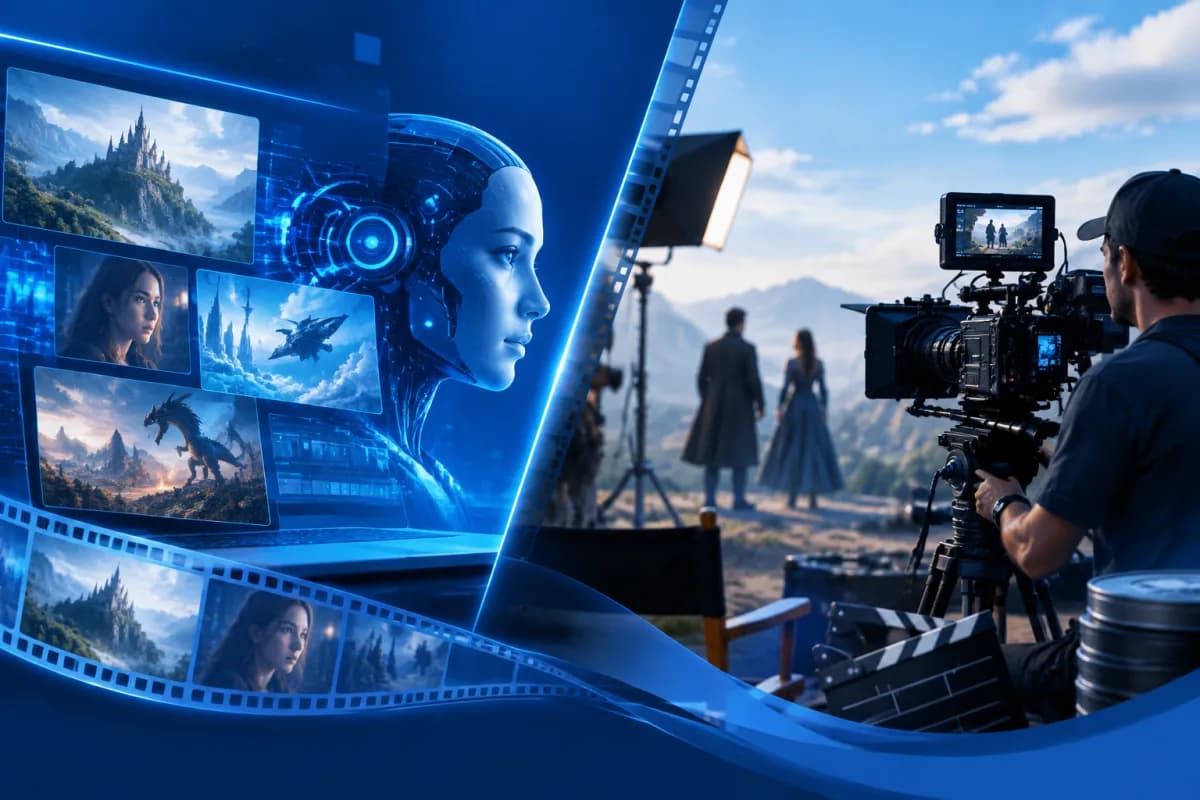
AI films are attracting the attention of filmmakers, businesses, and audiences thanks to their ability to generate images, voices, and effects using artificial intelligence. However, the term can be misleading: a film that uses AI is not necessarily made entirely by AI, and the technology does not automatically replace every part of the creative process.
So, what are AI films, how do they differ from traditional films, and which approach best suits your production goals? This article compares workflows, human roles, costs, and visual experiences to give you a more practical perspective on AI films vs. traditional films.
What are AI films?
AI films is a general term for film content that uses artificial intelligence in one or more stages of production. AI can help with brainstorming, drafting scripts, creating storyboards, generating images and voices, adding subtitles, editing video, or creating effects. Its use ranges from a small supporting tool to short films in which most of the visuals are generated by AI models.
It is therefore important to distinguish between films that use AI and films made entirely with AI. The first typically combines cameras, actors, directors, editors, and some AI tools. The second relies more heavily on generative models to create scenes, characters, or voice-overs, but still usually requires people to develop the concept, select the results, and finish the final product.
AI does not understand a story or communications goal the way a director does. Content-generation tools rely on data and prompts, so their output can be inaccurate, inconsistent, or unsuitable for the context. The final quality depends on how people frame their requests, review the results, and edit them.
Comparing AI film and traditional film production workflows
Traditional films: a well-defined process that relies heavily on real-world production
Traditional production usually begins with concept development, scriptwriting, budgeting, and pre-production. The production team selects actors, locations, equipment, shooting schedules, and lighting setups. This is followed by filming, sound recording, editing, color grading, sound design, and the preparation of final release versions.
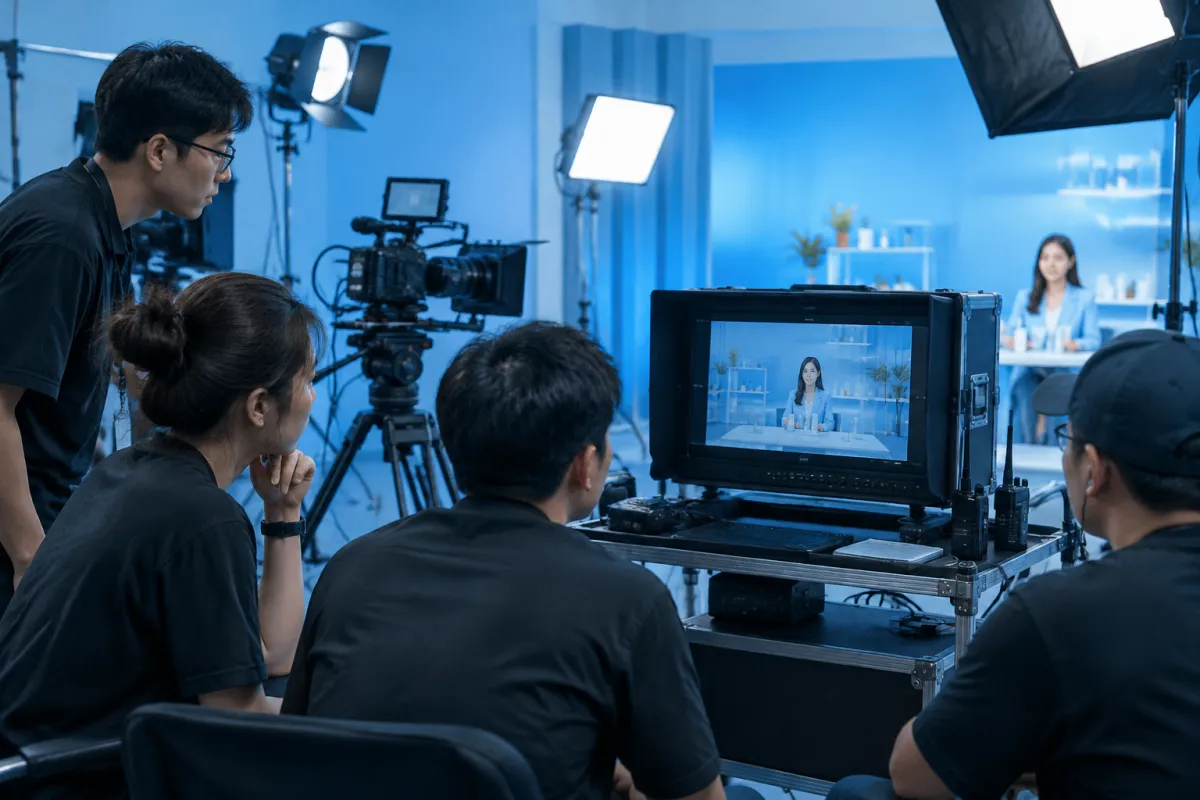
Each stage may require specialist staff and multiple rounds of collaboration. For instance, changing a setting after filming can sometimes require additional shoots or costly post-production work. In return, the crew can directly control performances, camera movements, props, and the physical environment on set.
AI films: faster content creation in some stages
For films that use AI, production teams can use tools to draft scripts, create visual references, build storyboards, or generate some background scenes. Other tools can help reduce audio noise, create subtitles, sort footage, or suggest edits. Repetitive tasks and work that requires testing many options can take less time.
However, the process is not as simple as entering a prompt and receiving a finished film. The team still needs to define the style, design characters, describe scenes, test multiple versions, select suitable results, and correct issues such as distorted hands, deformed objects, or unnatural movement. Scenes that demand a high degree of accuracy may need to combine live-action footage, graphics, and manual post-production.
- Traditional films: Most visuals are captured with cameras or created using post-production techniques and animation.
- AI films: Images, audio, or other content can be generated from data and prompts, alongside other production methods.
- Both approaches: Require planning, quality control, and refinement to ensure the final product meets its goals.
The role of people in each approach
In traditional filmmaking, people handle most creative and technical decisions directly. The director guides the story, actors bring characters to life, and cinematographers choose camera angles, while other departments manage sound, lighting, and post-production. Equipment helps capture the footage, but the crew is primarily responsible for the emotional and artistic choices.
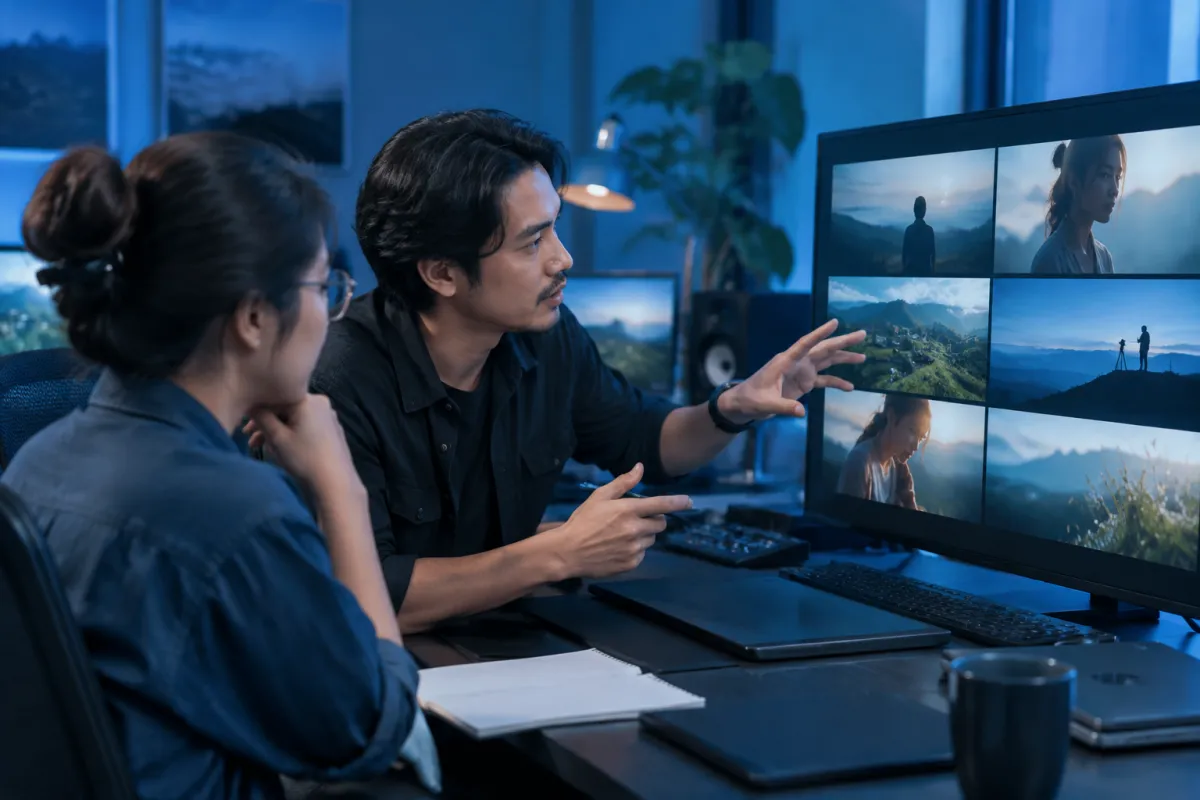
In AI filmmaking, some of the human role shifts from hands-on execution to coordination and evaluation. Filmmakers need to communicate their requirements clearly, provide appropriate reference materials, assess the tool’s output, and make edits as needed. Storytelling skills, visual literacy, and editing remain important; without clear direction, the result may look striking but feel disjointed or fail to convey the intended message.
AI also raises questions about ethical oversight and usage rights. When generating a voice, face, or style associated with a particular person, businesses should consider consent, privacy, and intellectual property rights. AI-generated content should also be reviewed to avoid misinformation, misleading images, or details that do not fit the brand.
AI can give production teams more options, but people remain responsible for the message, its accuracy, and decisions about how the content is used.
Cost and time: where you can save and where costs may arise
AI films can reduce certain costs, especially for concept videos, illustrative content, or scenes that are difficult to stage in real life. If there is no need to rent a location, build a set, or shoot multiple takes, the production team may save time and resources. AI is also useful when teams need to create several drafts and compare them before settling on a visual direction.
That said, it is not safe to assume that AI films are always cheaper. Costs may include software subscriptions, staff expertise, time spent testing prompts, fixing errors, maintaining consistency between scenes, and completing post-production. For projects that require precise visuals, consistent characters across multiple scenes, or broadcast-quality standards, reviewing and correcting the output can take considerable effort.
Traditional films typically have clear costs for staffing, equipment, locations, travel, and post-production. The larger the production, the more complex the organization may become. However, this approach is well suited to projects that need natural performances, real event coverage, accurate product demonstrations, or direct interaction between people.
To create a realistic budget, businesses should compare approaches based on their goals and the required level of polish rather than looking only at the cost of generating a single clip. Include revision time, content licensing, review staff, output formats, and the potential to reuse the material.
Visual experience and choosing the right approach
Traditional films have an advantage when realism, actor expression, and consistency in real-world settings matter. Lighting, movement, and physical interactions can be captured directly, helping audiences connect with the setting and emotions. However, the result depends on shooting conditions, budget, and the crew’s skill.
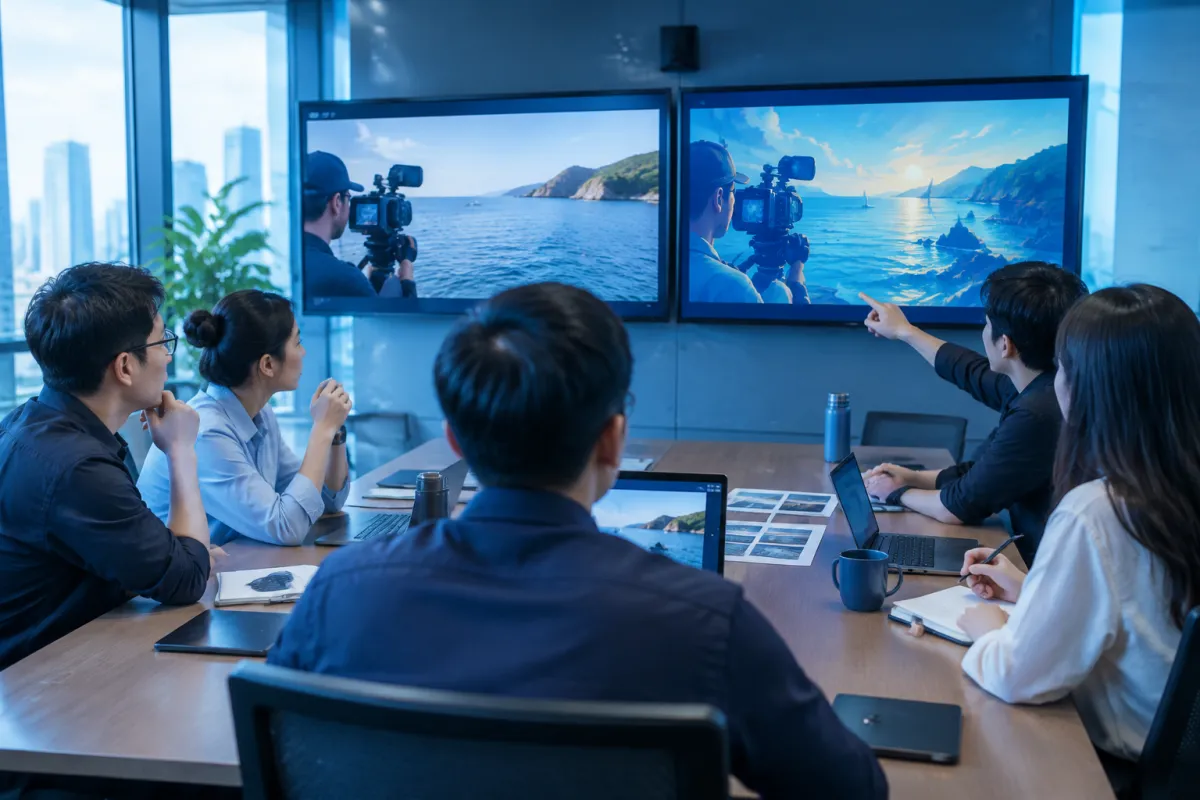
AI films can create imaginary worlds, fictional settings, or stylized visuals that would be difficult to produce in real life. The technology is useful for concept videos, experimental animation, illustrations, or content that needs multiple variations. However, visuals may be inconsistent across scenes, movement may look unnatural, or details may not follow the laws of physics. These limitations can reduce credibility in product videos or content that needs to convey accurate information.
Businesses can choose an approach based on the situation:
- Choose traditional films when you need to capture real people, actual products, events, interviews, or emotionally rich performances.
- Choose AI films when you want to test an idea, illustrate a concept that is difficult to film, or create stylized visual content within a controlled scope.
- Combine both when you want the credibility of live-action footage while using AI for storyboards, subtitles, effects, backgrounds, or rough cuts.
Before production, define your audience, key message, distribution platform, and success criteria. For branded content, align on the visual style, check for consistency, and ensure all product claims are accurate. Testing a short segment before rolling out the full project can also help identify issues with quality, costs, and the approval process early.
Conclusion
What are AI films? They are films that use artificial intelligence in one or more stages—not necessarily products made entirely by machines from start to finish. Traditional films excel at capturing people and the real world, while AI films offer more options for creating visuals, experimenting, and optimizing certain stages. Each approach has its own strengths, limitations, and cost structure.
The right choice depends on your communications goals, the level of realism required, your budget, and your content-control needs. If your business is considering using AI in video, websites, or marketing, LilyTech can help assess your needs and recommend a suitable approach. Contact LilyTech to discuss a solution for your project.

