
 Đoàn Lê Minh Anh
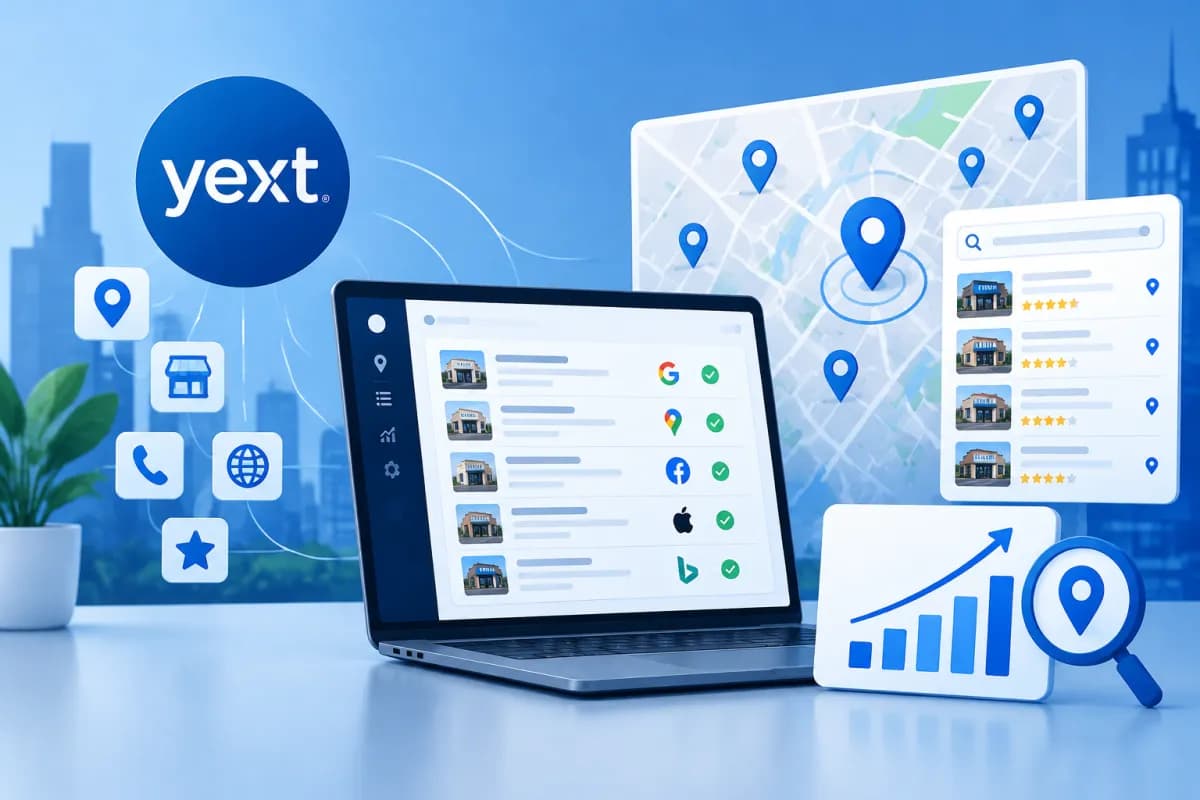
When customers search for a nearby store, clinic, or branch, information on Google, social media, and online directories can directly influence whether they decide to visit. If an address, opening hours, or phone number is inconsistent, a business could lose customers and undermine trust. Yext is a platform for managing business listings, helping businesses control location data across multiple channels from one place. For businesses managing multiple locations, Yext can simplify listing management and support local SEO.
Beyond distributing information, Yext can also support local content management workflows and help businesses monitor their online presence. However, the tool is most effective when input data is accurate, update processes are clearly defined, and Local SEO goals are appropriate. This article explains how Yext works, its practical benefits, and what to consider before implementation.
What is Yext, and what problem does it solve?
Yext is a software platform for managing a business’s digital presence, particularly for brands with multiple locations. One of its best-known functions is listing management: creating, updating, and monitoring business information on online platforms that support Yext integrations or distribution processes.

A business listing typically includes the brand name, address, phone number, hours of operation, industry category, website, and other attributes. For a single store, manually updating each profile may be manageable. But when a business has dozens or hundreds of branches, inconsistencies between records can arise easily, especially when opening hours change, a location moves, or contact information is updated.
Yext is designed to centralize data in one management system and then help sync it to connected platforms. Instead of signing in and editing each profile separately, teams can update information in a centralized system. Platform coverage and update capabilities depend on the market, profile type, integration partners, and the policies of each external service.
How Yext syncs business information
Implementation typically begins with an audit of existing data. Businesses need to identify their official locations, check the information currently appearing on different platforms, find duplicate profiles, and standardize how names, addresses, and phone numbers are written. This step is important because entering incorrect data into a centralized system can spread inconsistencies even further.

Once data has been standardized, businesses set up a profile for each location in Yext. Data can follow a shared brand structure while allowing for location-specific details. For example, the brand name and identity guidelines may be shared, while opening hours, phone numbers, on-site services, or service areas may vary by location.
- Standardize data: Define required fields, address formatting rules, naming conventions, and who is responsible for verification.
- Set up profiles: Enter business information and assign permissions so the appropriate staff can manage or approve changes.
- Connect platforms: Choose services that fit target customers and operating markets, then complete any verification requirements imposed by the destination platform.
- Sync and review: Monitor update statuses, check the information as it appears publicly, and resolve cases that have not been accepted or require additional verification.
- Maintain data: Update information when it changes and conduct periodic reviews to identify incomplete, duplicate, or outdated profiles.
Syncing does not always happen instantly. Some platforms may need time to process updates, require proof of ownership, or apply their own content rules. Businesses should therefore view Yext as a tool for coordination and management—not as a guarantee that every change will appear immediately across all channels.
Benefits for Local SEO and marketing
Consistent information makes it easier for customers to confirm that a business exists, where it is located, and whether it is open. For local search, accurate data is an important part of a strong digital presence. Centralized management also reduces repetitive work and helps prevent errors caused by multiple staff members updating profiles in different ways.

For brands with multiple branches, Yext can help establish management processes that scale. A central team sets shared standards, while local teams provide location-specific information and report changes. This helps businesses maintain brand consistency while accurately representing each location’s services and hours.
- Improve consistency: Reduce discrepancies in addresses, phone numbers, opening hours, and business categories.
- Save operational time: Cut down on manual work when updating information for multiple locations.
- Help identify issues: Monitor profile statuses centrally and prioritize locations with incomplete information.
- Improve the customer experience: Help people find essential information before calling, booking, or visiting a store.
- Support measurement: Depending on the features and plan, businesses may be able to track certain presence and engagement metrics to evaluate performance.
Even so, listings are only one part of Local SEO. Search rankings are also influenced by relevance, distance, prominence, website quality, local content, customer reviews, and many other factors. Businesses should not expect Yext alone to automatically secure a top position on Google.
Implementing Yext effectively: what to consider
Before investing, define the problem you need to solve. If your business has one location and rarely changes its information, a manual update process may be sufficient. By contrast, a centralized platform may deliver clearer operational value if you have multiple branches, several people involved in management, or frequent expansion plans. Compare licensing costs, implementation time, and ongoing staffing needs with your actual business scale.

Businesses should also create data standards before entering information into the system. These should specify display names, address formats, phone numbers, categories, service descriptions, and approval workflows. Each location should have someone responsible for verifying its data, while the central team oversees shared guidelines. Without clear data ownership, a new platform can still become a repository for inaccurate information.
Next, choose platforms based on actual customer behavior in Vietnam. Not every channel has the same usage or integration capabilities in every market. Marketing teams should check where customers typically search, call, get directions, or read reviews, and confirm Yext’s current support for those services.
LilyTech recommends combining listing management with a website optimized for local search, content tailored to each area, and a process for responding to customer reviews. This approach helps keep information on external platforms consistent with the website and brand messaging. Businesses should track relevant metrics, such as the number of verified profiles, the percentage of complete listings, impressions, calls, or direction requests, when platforms provide that data.
Conclusion
Yext helps businesses manage listings centrally and sync information across multiple platforms, making it especially useful for organizations with multiple locations. Its greatest value lies not only in reducing the work involved in updates, but also in helping establish consistent data processes that are easier to review and maintain. To achieve Local SEO results, businesses still need to combine accurate data with a strong website, useful content, and a positive customer experience.

If you are considering Yext or need to build a Local SEO process for a network of branches, contact LilyTech for advice on a solution suited to your business’s scale, market, and goals.

