
 Đoàn Lê Minh Anh
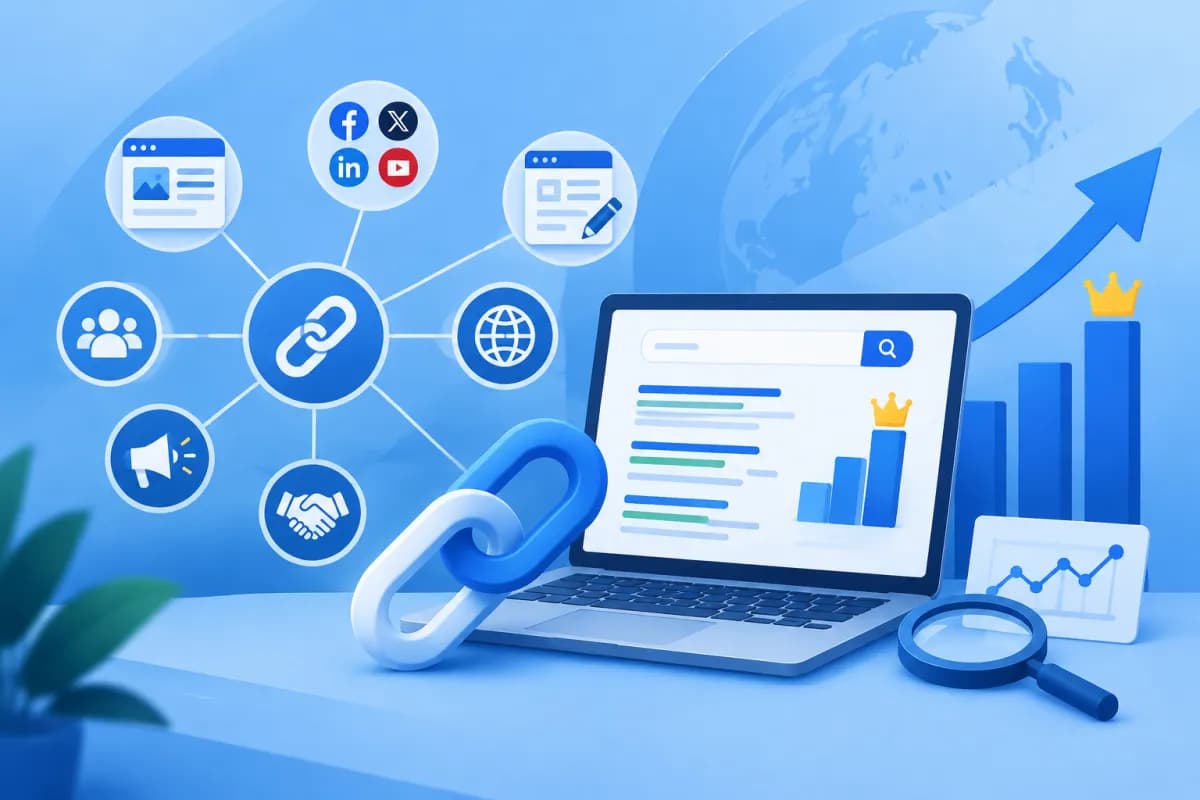
SEO doesn’t happen only on your website. Brand mentions, links from other sites, and off-site content promotion can all help search engines better understand a website’s authority, relevance, and influence.
So, what is off-page SEO, and which factors should businesses focus on to compete more effectively in search results? This article explores the key components, safe implementation practices, and metrics worth tracking.
What Is Off-Page SEO, and Why Does It Matter?
Off-page SEO is a set of optimization activities carried out beyond your website to strengthen its authority, popularity, and relevance to a topic or industry. While on-page SEO focuses on content, structure, and the on-site experience, off-page SEO concerns how your website is mentioned, linked to, or recommended on other platforms.

Google uses many signals to evaluate and rank web pages. There is no public formula showing how much each off-page signal contributes to rankings. However, quality links and a trustworthy brand presence can help search engines discover content, understand relationships between websites, and assess how well a source is recognized.
Effective off-page SEO does not mean building as many links as possible. The goal is to establish genuine trust: valuable content recommended by relevant sources, natural brand mentions, and consistent communications. This is a long-term process that should work alongside strong content, a technically sound website, and a positive user experience.
Backlinks: Important, but Quality Comes First
A backlink is a link from another website to your business website. When a reputable site links to useful content you’ve created, that link can give readers another way to discover your website and help search engines find the page and understand how it relates to others. For this reason, backlinks are often considered a core part of off-page SEO.

Backlink value is not just about quantity. When evaluating link-building opportunities, businesses should consider the following factors:
- Relevance: Is the linking website and page closely related to your industry, product, or the topic being discussed?
- Site authority and quality: Is the linking source trustworthy, well maintained, and intended for a real audience?
- Placement and context: A link placed naturally in useful content is generally more meaningful than one inserted into an unrelated section.
- Anchor text: The linked text should reasonably describe the destination page, without mechanically repeating keywords.
- Natural link profile: Link sources and placements should be diverse and consistent with normal brand-building activity.
Businesses can earn backlinks through in-depth research, data reports, how-to guides, expert insights, partner collaborations, and PR. Content is more likely to be cited when it offers useful information or a distinctive perspective. By contrast, undisclosed link buying and selling, low-quality website networks, or mass link creation can increase the risk of violating search engine spam policies.
Brand Authority and Mentions
Brand mentions in the press, on industry websites, in forums, or on other trustworthy platforms can expand awareness and create more opportunities to reach customers. An unlinked mention is not the same as a backlink, but it can still put your brand in front of users and support reputation-building efforts. Not every mention should be treated as a direct ranking signal; its practical value also depends on the source’s quality, context, and relevance.
To build authority, businesses should keep brand information consistent and clearly present their capabilities, team, and contact details. For expert content, cite data sources, share practical experience, and identify who is responsible for the information. These details help customers assess a business’s trustworthiness and provide a strong foundation for PR and content marketing.
Media relations should also start with informative value. Rather than sending generic promotional messages, businesses can offer expert commentary, survey data, implementation stories, or insights that would be useful to a publication’s readers. Relevant mentions are often more sustainable than pursuing links at any cost.
Social Signals and Other Off-Page Factors
Social media shares, comments, and followers should not be viewed simply as direct factors that boost a page’s rankings. Social platforms do, however, play a significant role in content distribution: a post that reaches more people can attract readers, spark discussion, increase branded searches, or be cited by other websites. This is an indirect supporting effect—not a guarantee that a certain number of interactions will improve your position on Google.
Beyond backlinks and social media, other off-site activities to consider include:
- Local SEO: Consistent business details across local profiles, relevant directories, and review platforms make it easier for customers to verify your address, services, and business hours.
- Customer reviews: Genuine feedback can support purchasing decisions and strengthen trust. Businesses should respond courteously and avoid fake reviews or pressuring customers to leave positive ones.
- PR and events: Professional activities, industry partnerships, and community contributions can create opportunities for a brand to appear in relevant contexts.
- Content distribution: Sharing resources, research, or guides through suitable channels can extend your reach and attract more qualified traffic.
These activities should serve business goals and customer needs rather than simply chasing an SEO metric. Referral traffic, leads, and brand awareness are also important outcomes to consider.
How to Build a Safe Off-Page SEO Strategy
A sustainable strategy starts by defining your goals, target customers, and areas of expertise. Next, review your existing backlink profile, identify potentially problematic sources, check your brand information, and assess your presence across external channels. Competitor analysis can reveal where other businesses are being mentioned, but you should not blindly copy all of their links.

- Create content worth recommending: Develop in-depth guides, proprietary data, useful tools, or perspectives based on practical experience.
- Identify suitable sources: Prioritize media outlets, partners, associations, and industry websites with relevant audiences over sites that simply sell links.
- Make a valuable pitch: Explain clearly how your content could benefit the recipient’s audience. Avoid mass, impersonal link requests.
- Coordinate communication channels: Combine PR, social media, email, and community activities to reach the right people.
- Monitor and adjust: Evaluate results regularly, continue activities that create value, and stop those that are risky or ineffective.
When measuring results, track the number and quality of referring domains, linked landing pages, referral traffic, branded searches, conversions, and ranking changes for target keyword groups. Combine data from website analytics and search management tools. A campaign may take time to produce results, so avoid drawing conclusions based only on ranking changes over a few days.
Conclusion: Optimize Off-Page SEO with LilyTech
Understanding what is off-page SEO helps businesses focus on genuine authority and visibility instead of chasing backlink volume. Relevant links, brand mentions in trustworthy contexts, strategic social media activity, and consistent local information can all support SEO goals when handled transparently and over the long term. The best results come from combining off-page SEO with useful content, a technically sound website, and a thoughtful customer experience.
If your business needs an SEO, PR, or backlink strategy aligned with its commercial goals, LilyTech can support you from assessing your current position to planning implementation and tracking performance. Contact LilyTech for advice tailored to your industry, resources, and stage of growth.

