
 Đoàn Lê Minh Anh
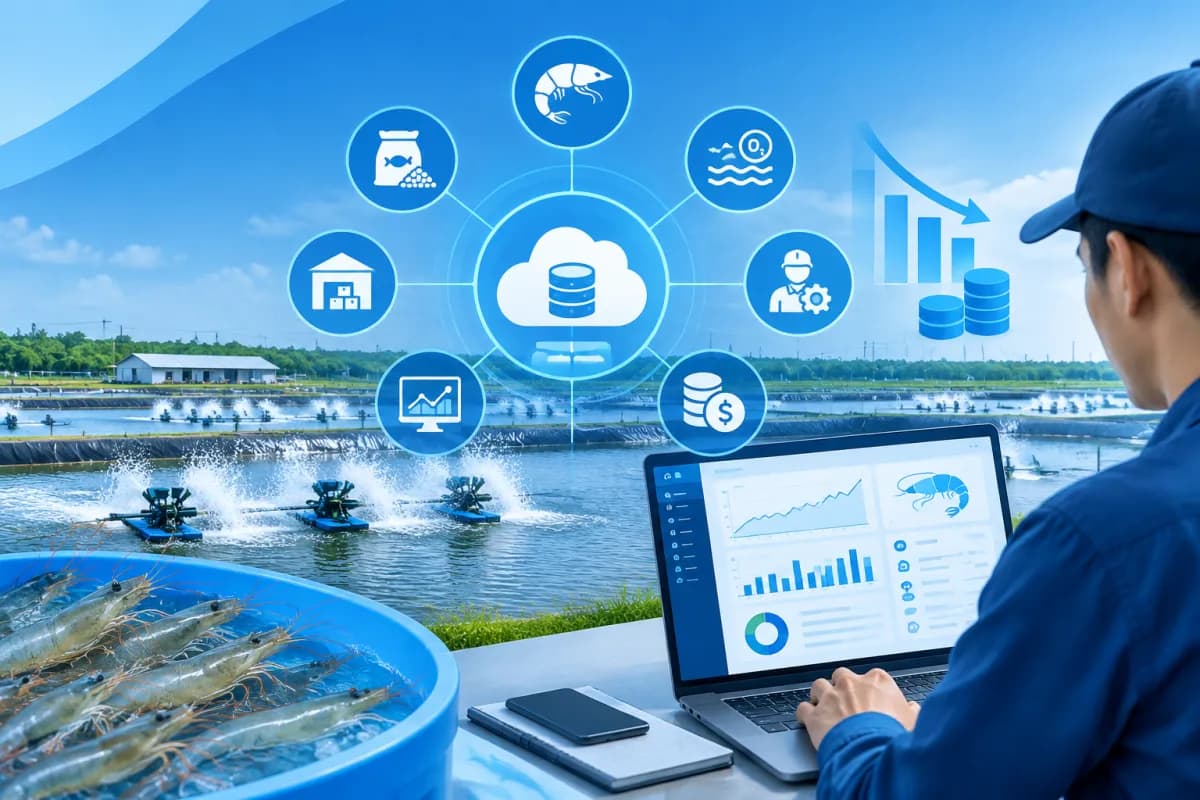
In shrimp farming, profitability depends on more than selling prices or harvest yields. The costs of seed, feed, medicines, electricity, labor, and environmental treatment can vary significantly from pond to pond—even between stages of the same crop cycle. When data is scattered across paper records or multiple spreadsheets, farm owners may struggle to see which costs are rising, which ponds are consuming the most budget, and which crop cycles are actually profitable.
That is why shrimp farm ERP for cost control is becoming increasingly practical. The right system brings production and financial data together by pond and crop cycle, from stocking through harvest. More importantly, ERP turns operational figures into actionable insights, helping managers spot issues early, control costs, and make data-driven decisions.
Why do shrimp farms need to manage costs by pond and crop cycle?
Ponds can differ in area, stocking density, water quality, care practices, and harvest results. So if managers only look at total farm costs, it can be difficult to identify what is driving changes in profitability. Higher feed costs may result from input prices, but they may also reflect a poor feed conversion ratio, slow shrimp growth, or an unsuitable feeding process.
Managing costs by crop cycle puts every expense and source of income in the right context. For example, one cycle may produce a high yield but a low profit margin because of extensive water treatment costs. Another may yield less but perform better thanks to tighter feed and labor management. When data is organized by pond and crop cycle, farm owners can make fair comparisons, learn from past results, and adjust plans for the next cycle.
ERP also helps prevent information from being held by just a few employees. If a staff member changes roles or documents go missing, the business still has centralized records for reference. This is an important foundation for expanding farm operations without a corresponding increase in manual data entry.
Shrimp farm ERP for cost control: tracking input costs from the start
Managing seed and stocking plans
In an ERP system, each pond or group of ponds should have its own profile, including area, pond ID, preparation date, stocking date, planned density, seed source, and supplier information. When seed is received, the system records the quantity, unit price, total value, related documents, and receiving pond. This lets managers check seed costs for each pond rather than seeing only the total amount spent on purchases for the entire crop cycle.

If seed is delivered in multiple batches, each batch should be recorded separately to track its source and compare it with farming results. This data helps evaluate suppliers, identify differences between planned and actual quantities, and examine how seed batches may relate to survival rates or harvest performance.
Tracking feed by day and growth stage
Feed often accounts for a large share of shrimp farming costs, so an ERP system should record the quantity issued from inventory, the pond using it, the issue date, feed type, and the employee responsible. This data can be compared with feeding plans, estimated biomass, and growth rates. If actual feed use exceeds a set threshold, the system can alert managers to investigate the cause.
Rather than tracking only the amount spent on feed, farms should also monitor consumption by pond, average price, and usage at each growth stage. This makes it easier to distinguish price changes from shifts in operational efficiency. ERP does not replace technicians’ expertise, but it provides clear enough data for them to assess conditions and make timely adjustments.
Managing medicines, treatments, and supplies
Every receipt or issue of medicines, biological treatments, water-treatment chemicals, and supplies should be recorded by item code, quantity, unit price, expiry date, purpose, and associated pond. The system should distinguish routine use from items required because of an incident. Managers can then see which ponds have high treatment costs, which supplies are used most often, and whether inventory is sufficient for upcoming plans.
Linking inventory issue records to care activities also helps reduce losses and duplicate entries. If approval is required for supplies that exceed set limits, the ERP system can ask the responsible person to provide an explanation before the transaction is completed.
Recording operating expenses and setting budgets for each pond
Not every cost is directly related to feed or medicine. Electricity for aerators, fuel, labor, equipment maintenance, sludge treatment, and outsourced services all affect profitability. ERP should let farms classify these costs and allocate them using suitable criteria, such as operating hours, pond area, days in culture, or actual usage.
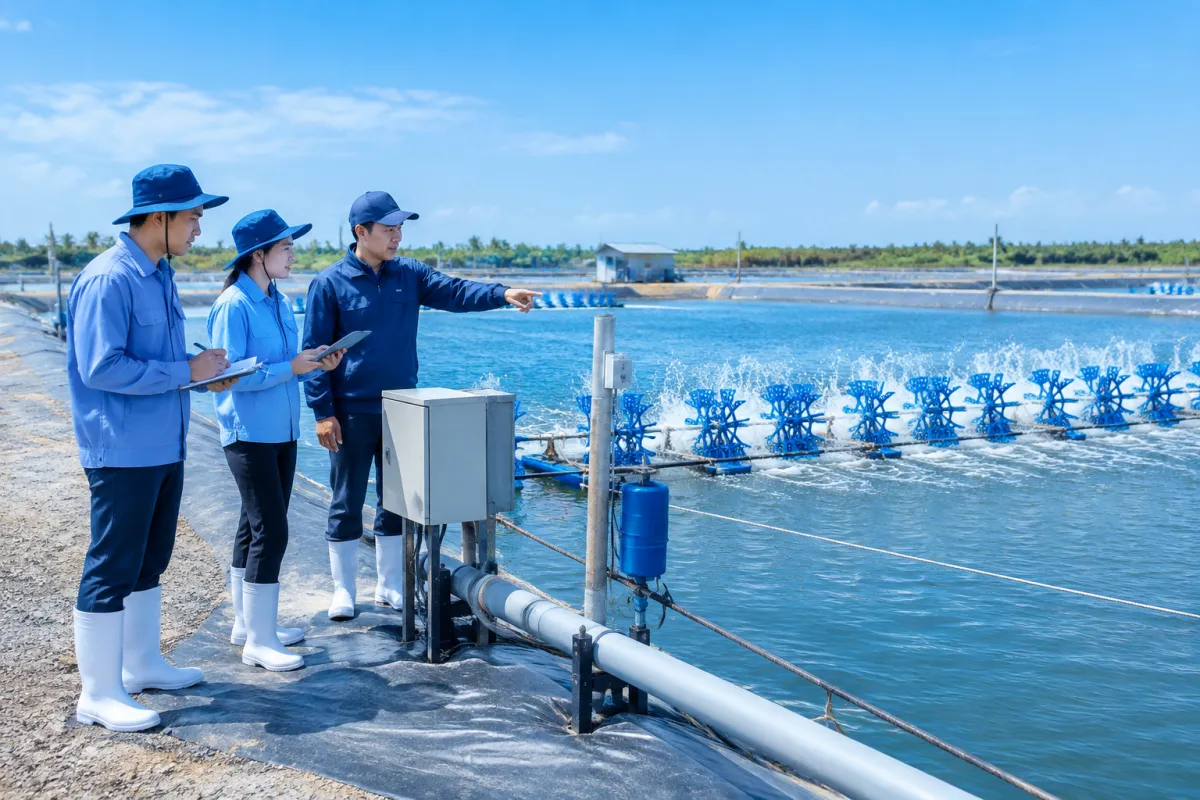
At the start of each crop cycle, managers can set an estimated budget for every pond, covering seed, feed, medicines, labor, electricity, and other expenses. As the cycle progresses, actual costs can be compared with the budget to identify items that have used up their allocation, those below plan, and the reasons for any variance. Alert thresholds should be configurable, since every farm has a different scale, process, and risk tolerance.
For information to be reliable, data entry needs to be tied to actual activities. For example, when the warehouse issues feed, the issue slip should also record the receiving pond; when equipment needs repair, the requester should select the equipment and the area where it is used. The clearer the process, the less manual adjustment cost reports will need at the end of the month or crop cycle.
ERP reports help identify what is reducing profits
The value of ERP lies not in the number of screens but in its ability to answer important management questions. Farm owners need to quickly see total costs by pond, crop cycle, and category; actual costs versus budget; feed and supply consumption; and projected revenue or revenue after harvest.

At the end of a crop cycle, the system should consolidate production, selling prices, revenue, and direct costs, then calculate profit or profit margin for each pond. If there are shared expenses, reports should clearly show the allocation method so users understand how the figures were calculated. Farms can also compare cycles by season, area, process, or supplier, provided that records are entered consistently.
Key metrics to include on a dashboard are:
- Cumulative costs and budget utilization for each pond.
- Feed, seed, medicine, and supply costs by crop cycle.
- Input consumption compared with plans or internal limits.
- Revenue, costs, and post-harvest profit by pond.
- Expenses exceeding set thresholds that require management review.
Reports are only useful if they are reviewed regularly. Rather than waiting until the end of a crop cycle to discover that costs exceeded the plan, managers should review the figures periodically to spot trends and intervene while there is still time to make adjustments.
How to implement ERP for a farm’s scale
There is no need to start with an oversized system. Initially, a farm can focus on pond and crop-cycle records, inventory management, recording major expenses, budgeting, and profit reporting. Once operations are stable, the business can expand into equipment maintenance, purchasing approvals, labor management, or data connections to sensors and accounting software.
Before choosing a solution, review how the farm currently records data: who enters it, when they do so, which documents serve as supporting evidence, and which managers need to see the reports. Standardize pond IDs, crop-cycle IDs, supply catalogs, and cost categories. If input data is not standardized, even good software may struggle to produce reliable reports.
Farms should also prioritize the user experience in the field. Employees may need to record information right at the pond, where using a computer is inconvenient. A simple interface, fast workflows, clear access permissions, and mobile support are therefore important considerations. Farms should also provide user training and support, and check data quality during the initial rollout.
Avoid digitizing every process at once before employees are ready. A project can start in one area or with a few ponds, measure the improvement, and then expand. A phased rollout helps farms manage investment budgets, reduce disruption, and adapt the solution to real-world use.
Conclusion: Turn cost data into a management advantage
Effective shrimp farm ERP for cost control should focus on managing expenses by pond and crop cycle, rather than simply replacing paper records with software. When seed, feed, medicines, supplies, and operating expenses are recorded in the right place at the right time, managers can see which costs are reducing profits and make decisions sooner.
Every farm has its own scale, farming processes, and approach to organizing data. LilyTech can advise on business requirements and design an ERP solution suited to your current operations, management goals, and growth plans. Contact LilyTech to discuss a roadmap for building a system to track costs, manage operations, and improve profitability at your shrimp farm.

