
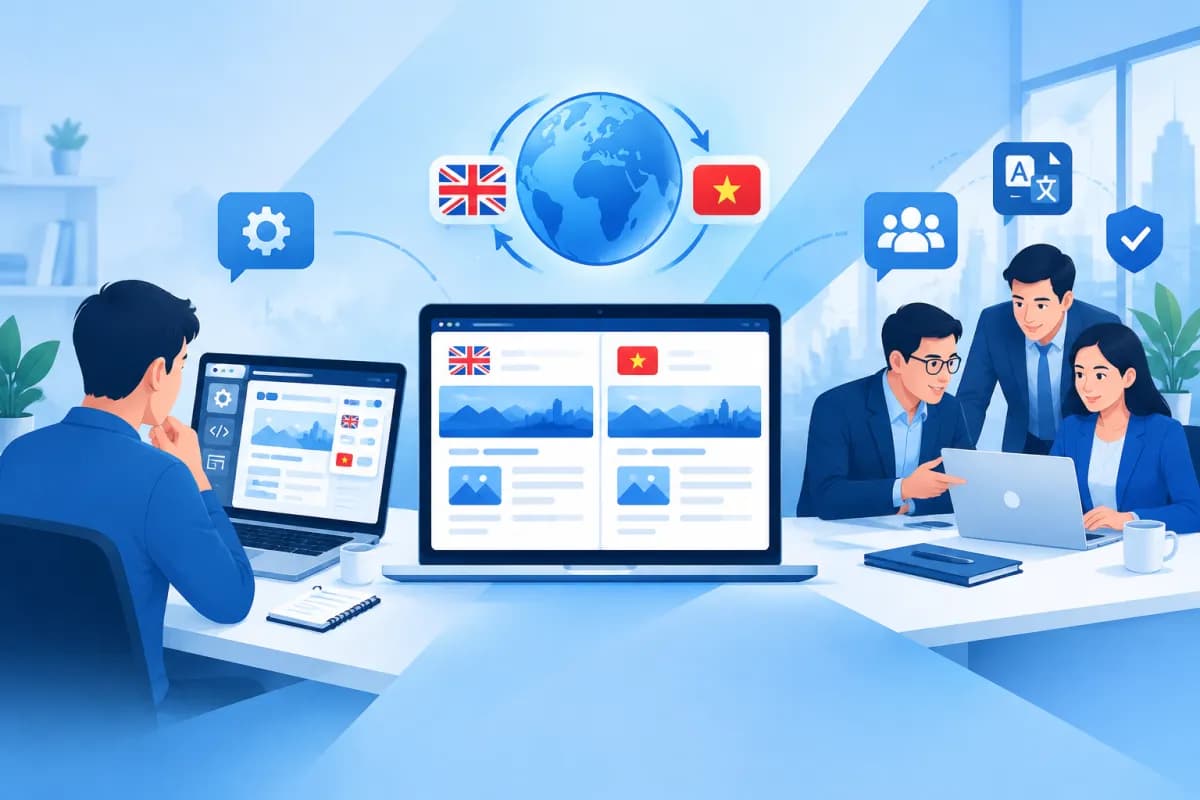
When expanding into new markets, serving international customers, or building a more professional image, businesses often consider a bilingual website upgrade. This involves more than translating content into another language. Page structure, user experience, SEO, content management, and operational workflows may all need adjustments.
So should your business handle the work in-house or hire a professional agency? Each approach has its own benefits, limitations, and resource requirements. This article helps you compare the key factors, identify risks, and choose an approach that suits your goals, budget, and internal capabilities.
What Does a Bilingual Website Upgrade Involve?
Before choosing an approach, businesses need to define the scope of the upgrade. A complete bilingual website is more than a language switch button. Visitors need to find the right version, read natural-sounding content, and complete actions such as requesting a consultation, making a purchase, or booking an appointment without difficulty.

Common workstreams include:
- Content review: identifying which pages need translation, editing, or new content tailored to different customer groups.
- Experience design: positioning the language selector, checking text length and fonts, reviewing how pages appear on mobile devices, and adapting details to the target market.
- Technical configuration: setting up URL structures, links between language versions, redirects, and the way content is managed in the system.
- SEO optimization: implementing titles, descriptions, language data, and market-specific content so search engines can identify the correct version of each page.
- Testing and operations: checking display issues, forms, links, page speed, and the process for updating content after the website goes live.
The workload depends on website size, the number of languages, the platform in use, and how much markets differ from one another. For that reason, estimating time or budget based only on the number of pages to translate can be misleading.
Upgrading to a Bilingual Website In-House: More Control, but the Right Skills Are Essential
In-house implementation is a good fit for small websites with simple structures and businesses that have staff capable of handling both content and technical work. This approach gives teams more control over timelines, makes cross-department coordination easier, and keeps content updates in-house.

Advantages of Doing It In-House
- Direct control: In-house teams understand the products, business processes, and how the company communicates with customers. This helps keep content aligned with the brand message.
- Flexible updates: Businesses can edit content, add information, or adjust campaigns without waiting for a vendor.
- Potentially lower outsourcing costs: If suitable staff are already available and the platform is easy to use, businesses may not need to invest heavily in external implementation services.
- Stronger internal capabilities: The team builds a better understanding of website structure, content management processes, and coordination between marketing and technical staff.
Limitations and Resource Requirements
Lower outsourcing costs do not necessarily mean a lower total cost. In-house staff need time to research, implement, test, and fix issues, which may affect their other responsibilities. Businesses that have not done this before may also spend time choosing tools, learning how to configure them, and resolving problems as they arise.
For an in-house project to succeed, businesses need to clearly assign responsibility for content, language quality control, and website maintenance. If any of these roles is missing, implementation quality may vary. For example, a translation may be accurate but unnatural, or the site may have a language switch button while some pages remain available only in Vietnamese.
Machine translation can help create a first draft, but that does not mean the content is ready to publish. Awkward phrasing, incorrect terminology, or information that does not suit the local culture can undermine trust. Businesses still need someone to review the content, particularly service pages, terms and conditions, product information, and calls to action.
Hiring a Professional Agency: Bringing Multiple Workstreams Together
Hiring a professional agency is a good fit for businesses that need to move quickly, have websites with many pages, or need to combine content, design, technical implementation, and SEO. An experienced partner can assess the current website, recommend an appropriate scope, and coordinate different workstreams as part of a single plan.

Advantages of Outsourcing
- Access to expertise across disciplines: Businesses can work with specialists in design, web development, content, and search optimization instead of building in-house capabilities for every step.
- Lower risk of missing key details: A structured discovery and testing process helps identify issues with site structure, user experience, content, or language configuration early.
- Clearer timelines and scope: The plan, delivery milestones, and acceptance criteria can be agreed on from the outset.
- Support for future growth: A partner can advise on website structure if the business plans to add languages, markets, or features later.
However, outsourcing usually requires a larger upfront budget and time from the business for coordination. An agency cannot understand every product detail or brand message unless the business provides complete information. If the agency lacks experience, the result may be a translated website that is difficult to use or has no long-term content management plan.
For this reason, assess a potential partner based on how they analyze the project, their working process, and what they will deliver—not just their quote. Clarify whether the scope includes technical SEO, mobile device testing, website management training, and post-launch support. For content, agree on who will handle translation, editing, and terminology approval.
Comparing Costs, Risks, and Ongoing Operations
For a fair comparison, businesses need to consider total resources, not just the upfront fee. In-house work may reduce agency costs but use up staff time. Outsourcing requires a service budget but may reduce the need for costly rework caused by inexperience. Neither approach is always cheaper; the result depends on internal capabilities and project complexity.
Consider the following criteria:
- Budget: In-house work is a good fit when staff and tools are already available. Outsourcing is a good fit when the business has a budget for specialist support and wants a clearly defined scope of work.
- Time: In-house teams can work flexibly but often need to balance the project with other responsibilities. A professional partner can focus more closely on the project, but still needs the business to provide timely feedback.
- Quality: The business understands its customers and products, while a professional agency brings design, technical, or SEO experience. The best results often come from combining both sides' strengths.
- Technical risks: Inconsistent configuration can make it harder for search engines to identify language versions, create broken pages, or undermine the conversion experience.
- Maintainability: Regardless of whether the project is handled in-house or outsourced, determine who will update content, review translations, and resolve issues after launch.
A common risk is treating a bilingual website upgrade as a one-time project. In practice, whenever products, prices, or policies change, the language versions also need to be reviewed. Without an update process, outdated content can conflict with new information and reduce the website's credibility.
How to Choose the Right Approach for Your Business
Businesses can start by answering a few questions: How many pages and features does the website have? Does the current team have people responsible for language, content, and technical work? Which markets will the website serve? What is the launch deadline? Who will maintain the content afterward?
In-house implementation is usually a good fit for small websites with easy-to-use management platforms, limited content, and teams capable of taking full responsibility. Even when handling the work internally, businesses should create a page inventory, terminology guidelines, a content approval process, and a testing checklist before publishing.
Hiring a professional agency is worth considering when the website is large, has many features, supports core business operations, or needs to launch quickly. This approach is also suitable if the business lacks technical staff, is unsure how to organize multilingual SEO, or wants a long-term growth plan.
Businesses can also use a hybrid model. The in-house team provides product information and brand direction, then reviews and approves content; the agency handles discovery, information architecture, technical configuration, and testing. This approach makes use of internal knowledge while bringing in specialist support for more complex work.
Whichever approach you choose, agree on goals, scope, responsibilities, timelines, and acceptance criteria in advance. You can review pages in batches, test the language switch on mobile devices, try out forms, and check key content. After launch, monitor user feedback and behavior to guide further improvements rather than treating the project as permanently complete.
Conclusion: Choose an Approach Based on Your Available Resources
A bilingual website upgrade affects content, user experience, technical implementation, and ongoing operations. Handling it in-house offers greater control and suits simpler projects and teams with the necessary skills. Hiring a professional agency gives businesses access to expertise across disciplines and is a good fit for complex websites or coordinated implementations. A hybrid approach is also practical for businesses that want to retain control of their content while getting technical support.
The key is to choose an approach based on business goals, project complexity, and total available resources, while preparing a process for ongoing maintenance after launch. If your business is considering a website upgrade, contact LilyTech for advice on the right scope of work, from website design and content organization to technical solutions and user experience optimization.

